Milan's Green Future: What City Leaders and Climate Experts Say About the Next Decade
As the city targets carbon neutrality by 2035, officials and environmental specialists outline bold plans for transport, housing and public space.
As the city targets carbon neutrality by 2035, officials and environmental specialists outline bold plans for transport, housing and public space.
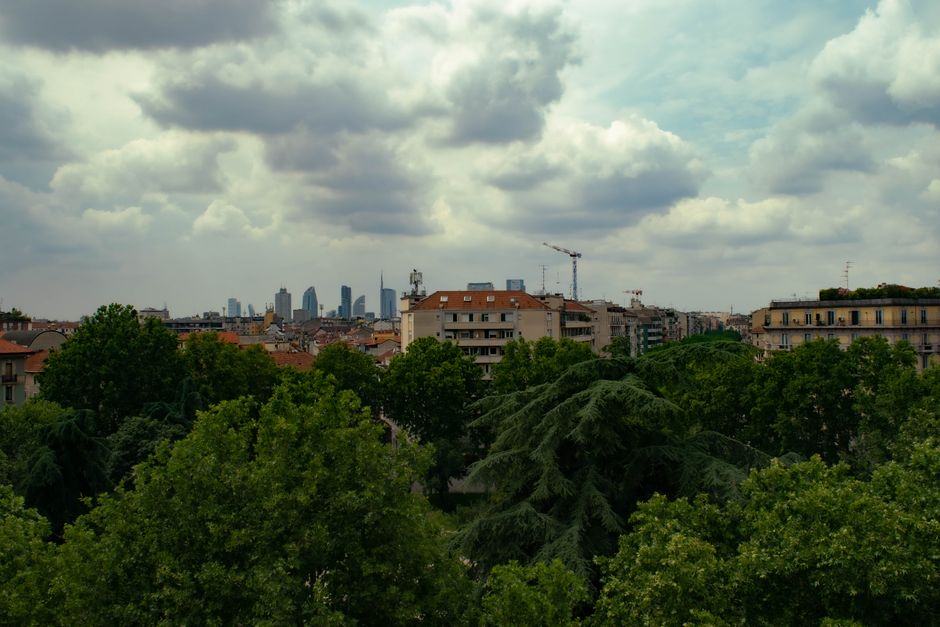
Milan's sustainability agenda is entering a critical phase, with city administrators and environmental experts mapping out strategies to transform one of Europe's most densely populated metropolitan areas into a carbon-neutral hub by 2035.
Speaking at a recent forum hosted by the Politecnico di Milano, urban planners emphasised the role of transport electrification as central to achieving these targets. The expansion of the metropolitan metro system—already Europe's third largest—features prominently in municipal blueprints, alongside plans to convert the city's bus fleet entirely to electric vehicles within eight years. Officials from Atm, Milan's transport authority, have indicated that current investments in battery infrastructure along routes serving neighbourhoods like Navigli and Bicocca represent only the opening phase of a much larger modernisation.
Environmental scientists affiliated with Milan's universities have stressed the urgency of addressing residential heating, which accounts for roughly 40 per cent of the city's carbon emissions. Retrofitting Milan's ageing apartment blocks—particularly the 1960s housing stock prevalent in Lambrate and Greco—remains a substantial challenge, though regional subsidies have begun making deep-energy renovation more accessible to homeowners.
The greening of public spaces is another focal point. Administrators have committed to planting 30,000 new trees across Milan by 2028, targeting high-pollution corridors including Viale Monza and areas near the Central Station. Park expansion initiatives in zones like Parco Forlanini signal a broader strategy to increase green cover from the current 8 per cent to 15 per cent of the city's total surface area.
Sustainability consultants working with the Milan Chamber of Commerce have flagged the circular economy as a competitive advantage. The city's fashion and design sectors—concentrated in districts like the Brera area—are being positioned as leaders in sustainable production standards, potentially generating jobs whilst reducing waste streams.
Yet experts caution that ambition alone is insufficient. Climate researchers at the University of Milan have warned that without stricter enforcement of building codes and significant public investment beyond current budgetary allocations, the 2035 timeline risks becoming aspirational rather than achievable. Water management and adaptation to intensifying heat waves remain underfunded priorities, they argue.
City officials counter that Milan's status as a global financial centre provides leverage for mobilising private investment alongside public resources. The upcoming G7 summit in Italy is expected to feature Milan's climate strategy prominently, potentially attracting international climate finance mechanisms to support the transition.
This article was compiled by AI from the sources linked above and screened before publishing. See our editorial standards.
How does this story make you feel?
Spread the word
About this article
Published by The Daily Milan
Daily brief
Free, in your inbox before 7am. Weekdays.
More in News