Milan's Multicultural Model: How Italy's Gateway City Compares to Global Migration Hubs
As displacement crises reshape demographics worldwide, Milan's pragmatic approach to integration offers lessons—and challenges—for cities from Berlin to Toronto.
As displacement crises reshape demographics worldwide, Milan's pragmatic approach to integration offers lessons—and challenges—for cities from Berlin to Toronto.
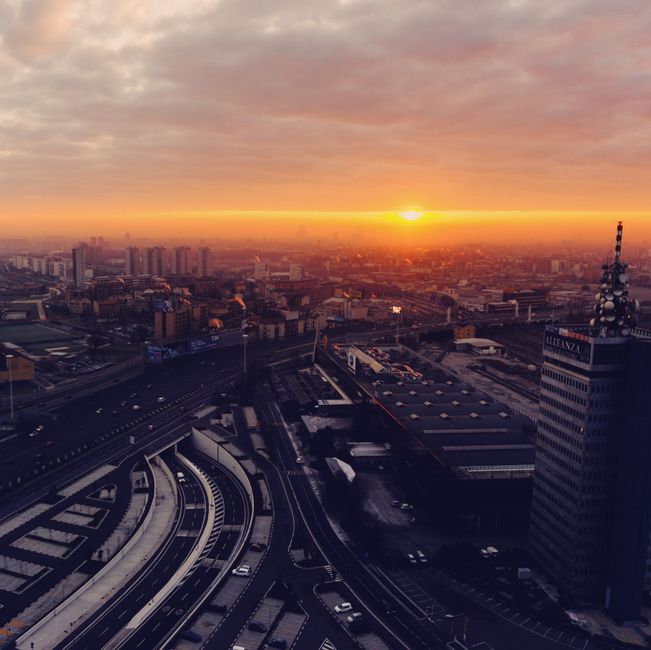
Walk through the Navigli district on a Saturday evening and Milan's multicultural reality is impossible to ignore. Pakistani restaurants neighbour Japanese izakayas. Romanian construction workers queue at the same espresso bars as German software engineers. Yet beneath this cosmopolitan veneer lies a carefully managed—and sometimes contentious—approach to integration that distinguishes Italy's economic powerhouse from peer cities facing similar migration pressures.
Milan hosts approximately 270,000 foreign-born residents, roughly 15% of its 1.3 million population. That proportion mirrors Berlin's migrant share but significantly trails Toronto's 47% and London's 37%. The composition tells a different story: Pakistani and Bangladeshi communities dominate Milan's Via Sarpi neighbourhood, while Eastern Europeans cluster in Quarto Oggiaro. This clustering reflects both choice and circumstance—ethnic networks provide affordable housing in a city where average rents have climbed 23% since 2020.
The city's integration strategy diverges markedly from its European peers. Rather than the hands-off multiculturalism of London or the assimilationist framework favoured in France, Milan emphasises what local administrators call "managed coexistence." The Fondazione Ismu, a research centre near Porta Romana, coordinates language programmes, job training, and community mediation. Last year, it served over 8,000 migrants through subsidised Italian courses—a fraction of demand, but proportionally more generous than comparable German or Austrian programmes.
Yet Milan's model has limits. Housing remains chronically expensive; a one-bedroom apartment in Navigli averages €900 monthly. Small-business ownership rates among migrants lag Berlin's, partly due to bureaucratic barriers and capital access. The 2023 Fondazione Ismu report noted that Milan's second-generation employment outcomes trail Toronto's and match neither German nor Scandinavian benchmarks.
What sets Milan apart is pragmatism born from economic necessity. As northern Italy faces demographic decline and labour shortages in construction, healthcare, and hospitality, the city government and business community have largely embraced migration as essential. The Chamber of Commerce actively recruits skilled migrants. This contrasts sharply with Toronto's managed points system or Berlin's recent tightening.
Yet integration remains incomplete. The 2024 integration index ranked Milan 12th among European capitals—ahead of Rome but behind Vienna and Stockholm. Rising far-right political sentiment poses risks. Still, as global migration pressures intensify and displacement crises swell—from Venezuela to the Horn of Africa—Milan's balancing act between economic pragmatism and social cohesion offers a instructive, if imperfect, model.
This article was compiled by AI from the sources linked above and screened before publishing. See our editorial standards.
How does this story make you feel?
Spread the word
About this article
Published by The Daily Milan
Daily brief
Free, in your inbox before 7am. Weekdays.
More in News