Milan's Creatives Speak Out: Duplicate Images Are Costing Them Work and Reputation
From Brera studio photographers to Navigli designers, Milan's visual community is demanding action on the flood of replicated imagery eroding their livelihoods.
From Brera studio photographers to Navigli designers, Milan's visual community is demanding action on the flood of replicated imagery eroding their livelihoods.
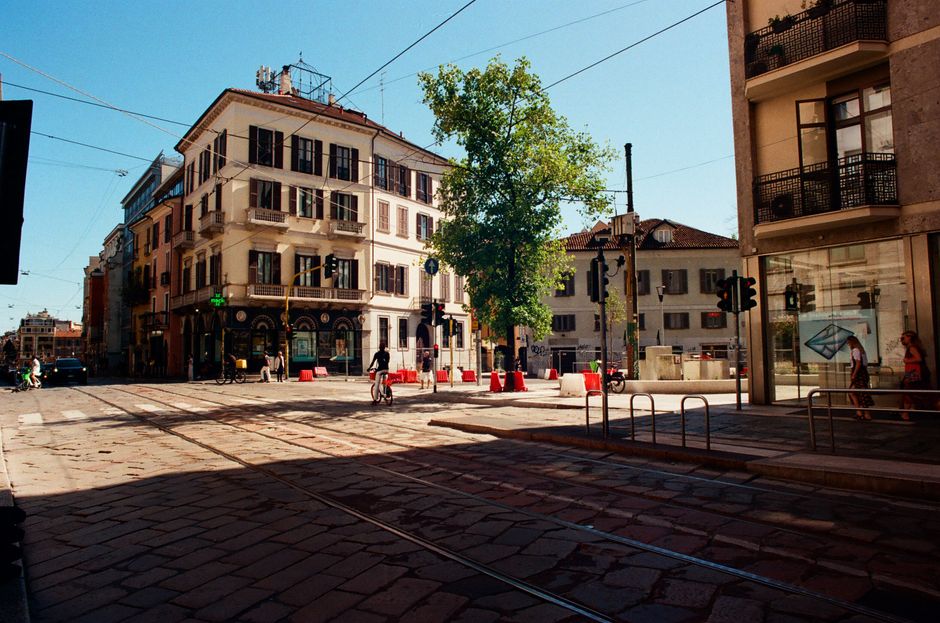
Photographers, graphic designers and brand consultants working across Milan say a surge in duplicate and AI-replicated imagery circulating through stock platforms and social media channels is hitting their income, muddying their portfolios and, in several cases, attaching their original work to clients they never agreed to represent. The problem is not new, but practitioners from the Brera Design District to the Navigli waterfront say it has reached a tipping point in 2026.
The timing matters. Milan is less than five months from hosting events tied to the Milan-Cortina 2026 Winter Olympics, and the city's fashion and design economy — already under pressure from a tightening luxury market — depends heavily on distinctive, rights-clear visual identity. A wave of duplicated commercial imagery undermines precisely the originality that brands pay a premium to protect.
Conversations this week along Via Tortona, the heart of Milan's design corridor, turned up the same complaint repeatedly: original work showing up stripped of metadata, reposted on third-party platforms, and algorithmically served to potential clients as cheaper alternatives. One studio in the Isola neighbourhood posted a public notice on its website in June warning past clients that unlicensed versions of a 2024 interior campaign were in circulation. The studio declined to name the specific platforms involved, citing ongoing legal discussions.
Community groups tied to Fondazione Prada and the creative incubator BASE Milano have both fielded informal complaints from members over the past two quarters, according to notices posted on their respective community boards. BASE, which sits on Via Bergognone 34 and hosts more than 200 resident practitioners, circulated a guidance document in May advising members on reverse-image search tools and EXIF metadata recovery as first-line defences. Fondazione Prada has not issued a formal statement on the matter.
The frustration runs beyond economics. Designers describe a reputational dimension: their original work appearing alongside brands or campaigns they would not choose to associate with, because the duplicate image has been recontextualised entirely. For a city whose design economy was valued at roughly €7.8 billion in a 2024 report by the Camera Nazionale della Moda Italiana, the erosion of visual authorship carries real commercial weight.
Italy's copyright framework, governed by Legge 633 del 1941 and updated periodically since, does provide authors with moral rights that cannot be waived — including the right to be identified as creator and to object to distortion of their work. The practical problem is enforcement speed. Filing a claim with the Tribunale di Milano, which handles intellectual property disputes for the region, can take months to produce even a preliminary injunction, and cross-border cases involving non-EU platforms add further complexity.
Practitioners who attended a session at the Politecnico di Milano's design faculty in Piazza Leonardo da Vinci last month heard recommendations that included watermarking at higher resolutions before any digital delivery, registering work with the Società Italiana degli Autori ed Editori (SIAE) as timestamped evidence of creation, and using Content Credentials — an open technical standard backed by the C2PA coalition — to embed verifiable authorship data directly into image files. Several participants noted that the advice, while sound, required time and resources that freelancers working alone could not always spare.
The Camera Nazionale della Moda Italiana has not yet announced a sector-wide initiative addressing duplicate imagery, though the issue is expected to feature in discussions at Milano Fashion Week, scheduled for September 2026. Organisations including BASE Milano are pushing for a coordinated protocol before then — one that would create a shared registry of flagged duplicate incidents across the Lombardy creative sector.
For now, the most concrete advice circulating among Milan's visual community is procedural: document everything before it leaves your hard drive, register with SIAE, and check your published work against reverse-image tools at least once a month. It is unglamorous housekeeping for a city that built its global reputation on visual precision — but practitioners say it has become as routine as invoicing.
How does this story make you feel?
Spread the word
About this article
Published by The Daily Milan
Daily brief
Free, in your inbox before 7am. Weekdays.
More in News