Milan's Design and Fashion Archives Race to Fix Duplicate Image Crisis This Week
A push to clean up thousands of redundant digital files is reshaping how Milan's cultural institutions and luxury brands manage their visual archives.
A push to clean up thousands of redundant digital files is reshaping how Milan's cultural institutions and luxury brands manage their visual archives.
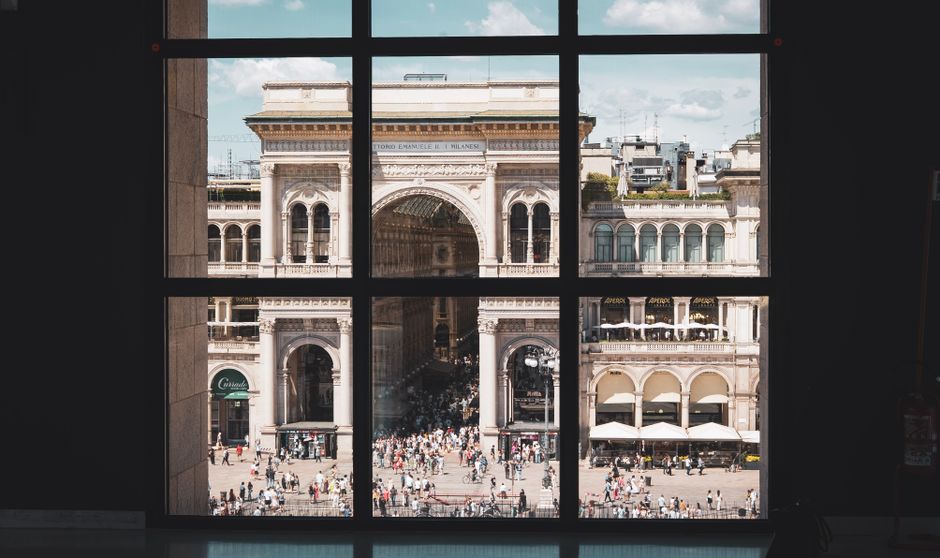
Archivists and digital asset managers across Milan moved urgently this week to address a growing problem inside the city's fashion houses, design studios, and public cultural institutions: duplicate image files clogging storage systems, inflating costs, and increasingly causing errors in cataloguing ahead of the Milan-Cortina 2026 Winter Olympics, which opens in February. The scale of the issue became clearer after a working group convened at the Triennale Milano on Viale Alemagna published its findings on Thursday, identifying redundant digital assets as a systemic risk to institutions holding large visual archives.
The timing is not coincidental. Milan's cultural and commercial institutions have spent the past three years digitising enormous back catalogues — everything from runway photography shot in the Quadrilatero della Moda to architectural renderings from Porta Nuova's ongoing development phases. That acceleration produced a secondary problem: files copied across servers, uploaded multiple times by different departments, and stored in incompatible formats. Administrators describe the result as a tangle of near-identical images with no consistent deduplication protocol.
The Fondazione Prada on Largo Isarco and the Castello Sforzesco's digitisation unit in the centro storico are among the institutions confirmed to be running deduplication audits this week. At Castello Sforzesco, conservators have been working since June 23 to reconcile image records held across at least four separate database systems, some inherited from pre-2018 cataloguing software. The risk is not abstract: mislabelled or duplicated files have previously caused incorrect metadata to travel downstream into public-facing collections, affecting what researchers and journalists can access reliably.
In the fashion sector, the pressure is commercial as well as archival. Luxury houses with ateliers concentrated between Via Montenapoleone and Via della Spiga rely on digital asset management platforms to handle product images for global e-commerce. A single product shoot can generate upwards of 400 raw files; without automated duplicate detection, storage expenditure compounds rapidly. Industry analysts tracking European luxury retail have noted that unmanaged digital archives are now a measurable line item in operational budgets, though precise figures vary by house and are not publicly disclosed.
The Triennale working group, which included representatives from design studios in the NoLo district and technology partners based in the Porta Nuova cluster, documented cases where the same image existed in five or more versions across a single institution's storage infrastructure. The report recommended adoption of perceptual hashing — a technique that identifies visually similar images even when file names differ — as a standard across Milan's publicly funded cultural bodies. It set a provisional implementation target of October 2026, timed to precede the heaviest phase of Olympics-related media production.
The European Union's digital cultural heritage framework, updated in March 2025, already requires member-state institutions receiving EU digitisation funding to demonstrate deduplication compliance as part of grant reporting. Institutions that fail to meet the standard risk clawbacks on grants distributed under the Creative Europe programme, which allocated roughly €2.44 billion across its current cycle. That regulatory backdrop has added urgency to what might otherwise have been treated as a housekeeping matter.
For smaller design studios and independent photographers working out of spaces in the Tortona district — historically the heart of Milan's creative-industry cluster during Salone del Mobile — the practical guidance this week has been more immediate. Several shared workspace operators on Via Tortona circulated a checklist on Thursday advising tenants to audit cloud storage accounts before the end of the month, citing both cost and data protection considerations under Italian privacy law.
The next step for publicly funded bodies is a compliance review scheduled for September, when Lombardy's regional culture directorate will assess which institutions have begun implementing deduplication tools. Private companies face no equivalent deadline, but the Triennale group's report is expected to be circulated to the Camera Nazionale della Moda Italiana, which represents the major fashion houses, in the coming days. How the industry body responds will determine whether the push for standardised image management extends beyond Milan's museums and into the commercial core of its fashion economy.
How does this story make you feel?
Spread the word
About this article
Published by The Daily Milan
Daily brief
Free, in your inbox before 7am. Weekdays.
More in News