Milan's Digital Archives Hit Crisis: Officials Launch Massive Duplicate Image Cleanup
Years of fragmented cataloguing across the city's cultural institutions have forced a reckoning — and a costly, overdue cleanup.
Years of fragmented cataloguing across the city's cultural institutions have forced a reckoning — and a costly, overdue cleanup.
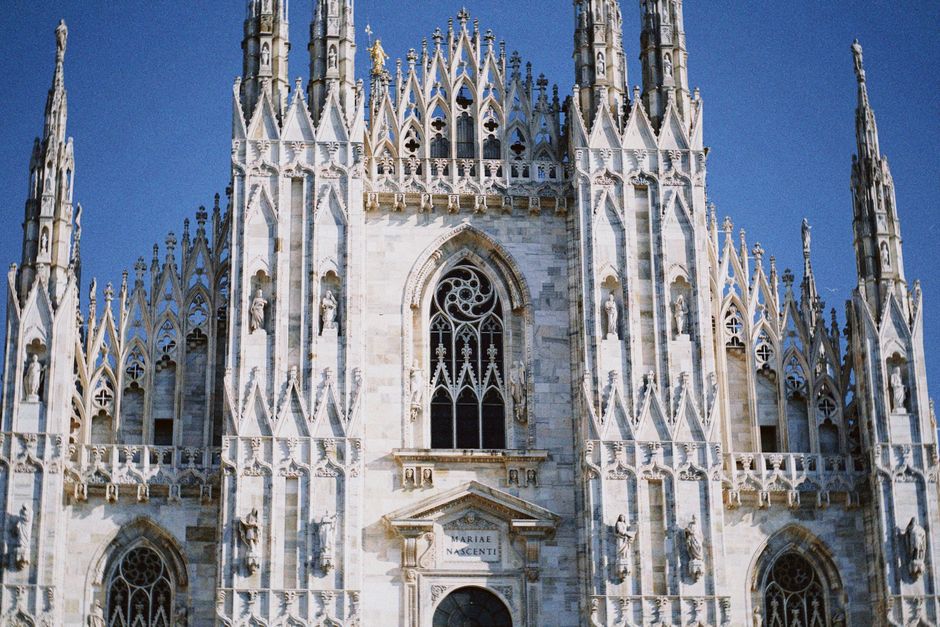
Milan's public cultural bodies are midway through one of the most unglamorous but consequential digital housekeeping exercises in the city's recent history: a systematic campaign to identify and replace duplicate images embedded across thousands of official digital records, exhibition catalogues, and public-facing archival databases. The problem did not appear overnight.
The origins trace back to the rapid digitisation push that ran roughly from 2010 through 2018, when institutions from the Pinacoteca di Brera to the Castello Sforzesco's archival departments each pursued their own cataloguing systems with minimal coordination. Each body chose its own metadata standards, file-naming conventions, and image compression protocols. When the city eventually pushed toward integrated platforms — most visibly through the Comune di Milano's broader smart-city agenda linked to the Milan-Cortina 2026 Winter Olympics digital legacy programme — the seams showed immediately.
The core issue is straightforward: when different departments digitised the same physical artefact independently, they often uploaded multiple versions of the same image under different file names, different resolution settings, and sometimes with conflicting descriptive metadata. A single Lombardy-era textile held in the Museo del Novecento's adjacent civic collections could appear four or five times across linked databases, each entry pulling a slightly different image file — some watermarked, some cropped, some degraded through repeated re-saving. Multiply that across tens of thousands of catalogue entries and the duplication problem becomes structural.
The Porta Nuova district's emergence as Milan's de facto tech and creative-industry hub has added urgency. Several design and fashion houses operating out of the Corso Como corridor and the Isola neighbourhood have signed data-sharing agreements with civic cultural platforms over the past three years, partly in anticipation of Olympics-related international traffic to official city portals. Those commercial partners found the duplicate image problem almost immediately: inconsistent visual assets undermine brand-adjacent projects and, more practically, create SEO confusion and broken display logic in multilingual interfaces.
Lombardy's regional government, which has had a long-running tension with the centre-left administration at Palazzo Marino over resource allocation and cultural governance, has not made the coordination easier. Regional and municipal cataloguing projects have at times run in parallel rather than in concert, each accumulating their own legacy image libraries. By some internal estimates circulated among archivists at institutions along Via Brera, as many as 30 percent of image records in the integrated civic portal contain at least one duplicate or near-duplicate file — though that figure has not been independently verified by a published audit.
The duplicate image replacement process is not simply deleting redundant files. Each candidate image must be reviewed against the master physical record, checked for metadata accuracy, assessed for resolution suitability across desktop and mobile display, and then re-tagged under a standardised URI scheme introduced by the Comune di Milano's digital infrastructure office in late 2024. Staff at the Biblioteca Ambrosiana and the Archivio Storico Civico have both committed personnel to the programme on a rotational basis, according to publicly available cooperation agreements published on the city's institutional transparency portal.
The cost is real. Digital remediation projects of comparable scope in cities like Amsterdam and Barcelona have run into seven-figure euro budgets when staff time and system migration are fully costed. Milan has not published a full breakdown for this specific initiative, but the digital infrastructure envelope within the city's 2025-2026 budget — approved at Palazzo Marino in December 2024 — allocated €4.2 million to civic data quality and platform integration work, of which archival remediation is a named component.
The practical deadline sharpening minds is February 2026, when Milan-Cortina events begin drawing international press and institutional visitors who will use city cultural portals as primary research tools. Archivists working on Via Rovello and within the Sforzesco complex have been told to prioritise records linked to any exhibition or event scheduled within the first Olympic window. After that, the broader catalogue cleanup continues on a rolling basis — but the Olympics have, in effect, forced a triage that years of internal advocacy for digital standards could not.
How does this story make you feel?
Spread the word
About this article
Published by The Daily Milan
Daily brief
Free, in your inbox before 7am. Weekdays.
More in News


