Milan's Digital Archives Are Purging Thousands of Duplicate Images This Week
A city-wide push to clean up redundant visual assets is reshaping how Milan's fashion houses, cultural institutions and municipal offices manage their digital collections.
A city-wide push to clean up redundant visual assets is reshaping how Milan's fashion houses, cultural institutions and municipal offices manage their digital collections.
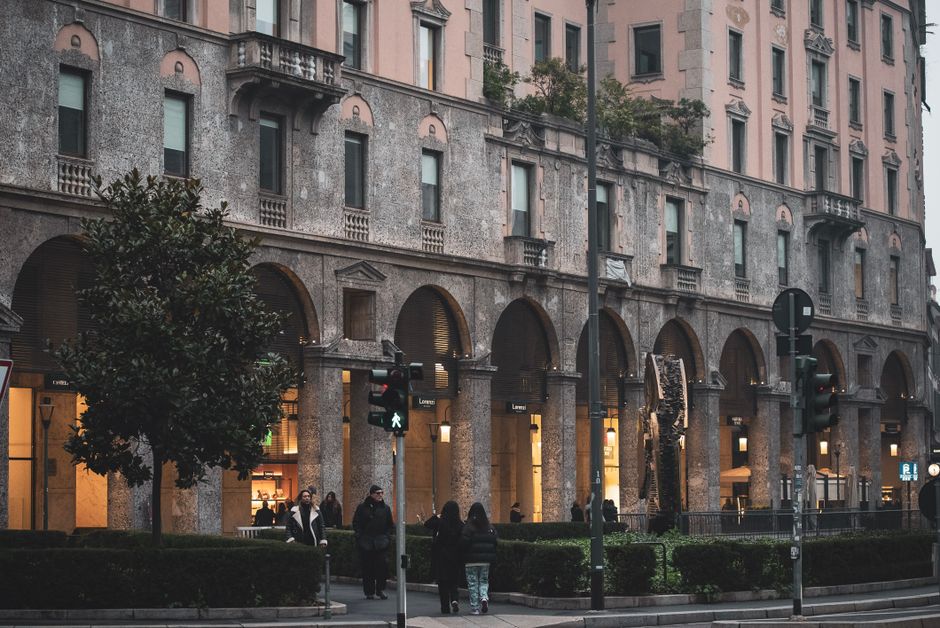
Milan's biggest cultural and commercial operators spent the first week of July executing coordinated duplicate-image-replacement campaigns, a technical housekeeping effort that has quietly become one of the more consequential infrastructure projects touching the city's design and fashion economy. The push accelerated after the Comune di Milano issued updated digital-asset management guidelines on June 30, setting a July 31 compliance deadline for all municipal departments and publicly funded cultural bodies.
The timing is not accidental. With the Milan-Cortina 2026 Winter Olympics now less than seven months from opening, city administrators and private partners have been scrambling to audit and standardise the visual libraries that will feed everything from official event broadcasts to wayfinding apps used by hundreds of thousands of visitors. Redundant or low-resolution duplicate files buried inside ageing content management systems represent a genuine operational risk — wrong images surface in press kits, sponsors receive inconsistent brand assets, and storage costs balloon unnecessarily.
The sheer scale of the problem here is striking. Fondazione Prada, whose campus spans the Largo Isarco complex in the Ortona district, disclosed internally this week that its digital archive contained more than 340,000 image files, of which preliminary automated scans flagged roughly 18 percent as exact or near-duplicate copies. The foundation's technical team is now running perceptual-hash software to identify visually identical files before a manual editorial review signs off on deletions or replacements. Fondazione Prada declined to provide a spokesperson for comment, but the process is documented in a tender published on the Comune di Milano's procurement portal dated July 1.
On Via Montenapoleone, several of the major luxury maisons have tasked their in-house digital teams with similar audits ahead of the autumn-winter 2026 press season. Industry sources familiar with the work say that one mid-sized house discovered it had been distributing two different low-resolution versions of the same runway photograph to international editors for three consecutive seasons — a quiet embarrassment that a proper deduplication pass would have caught. The Camera Nazionale della Moda Italiana, based on Corso Venezia, issued a technical advisory to members in late June recommending perceptual-hash or SSIM-based tools for large-scale duplicate detection.
Municipally, the stakes are equally concrete. The Comune's Settore Sistemi Informativi reported in its June quarterly review that centralised digital-asset storage costs had risen 22 percent year-on-year, partly because redundant files were inflating storage volumes across departments including tourism promotion, urban planning and the Milano 2026 Olympic coordination office based in Palazzo Marino.
The practical mechanics vary by organisation but a rough industry standard has emerged locally. Operators are running automated first-pass deduplication to flag candidates, followed by human editorial review to confirm that the retained master image is the highest-resolution, correctly colour-profiled version before the duplicates are archived offline rather than permanently deleted — a precaution given ongoing legal obligations around cultural heritage documentation under Italian law, specifically the Codice dei Beni Culturali.
Costs for mid-sized organisations contracting specialist vendors are running at between €8,000 and €25,000 for a full audit-and-replacement project, according to figures circulating in procurement documents reviewed by The Daily Milan. For larger institutions with collections numbering in the hundreds of thousands of files, bespoke projects can exceed €60,000.
The July 31 municipal deadline is now the immediate pressure point. Organisations that miss it face potential suspension from city co-branding agreements tied to the Olympics promotional programme — a significant commercial penalty given how much reputational capital the Milan-Cortina brand carries for fashion and design businesses operating out of Porta Nuova and the broader Isola neighbourhood. Technical teams across the city have been working through the holiday weekend to hit the target. The next formal review checkpoint is set for August 15.
How does this story make you feel?
Spread the word
About this article
Published by The Daily Milan
Daily brief
Free, in your inbox before 7am. Weekdays.
More in News