Milan's Rental Yield Reality: What Investor Returns Actually Show in 2026
As prices climb past €5,000 per square metre across the city, rental income tells a starkly different story about where Milan's property market is truly headed.
As prices climb past €5,000 per square metre across the city, rental income tells a starkly different story about where Milan's property market is truly headed.
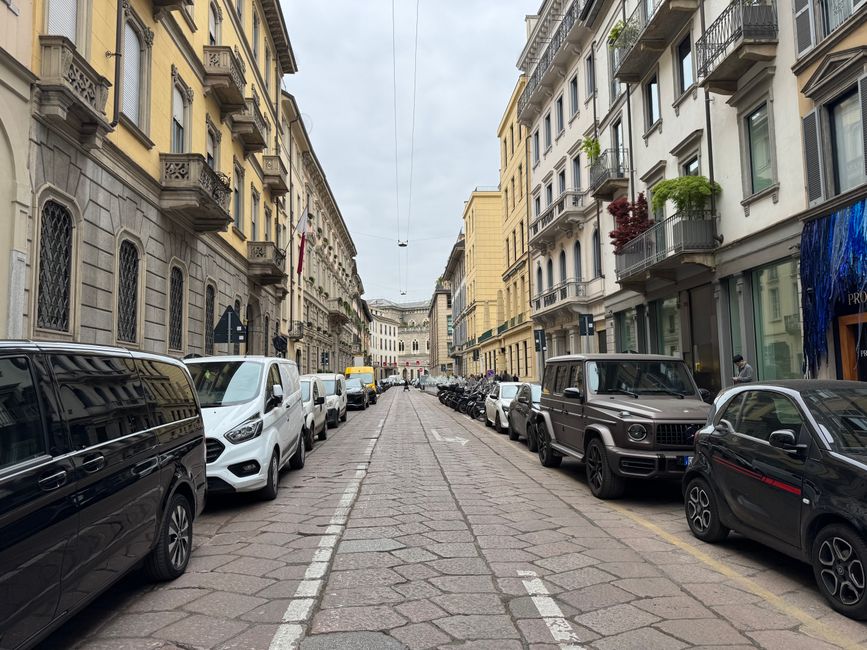
Milan's property market has long attracted international capital, but the gap between purchase prices and rental yields is widening into a chasm that even seasoned investors are finding difficult to ignore.
Across the Navigli district—where converted warehouses and period townhouses now command €6,500 to €7,200 per square metre—gross rental yields hover around 3.2 to 3.8 percent annually. Translation: a €800,000 apartment might generate €25,600 in yearly rent, before expenses. In Brera and Porta Nuova, the city's traditional luxury bastions, yields compress further to 2.8 to 3.2 percent as purchase prices exceed €8,000 per square metre for prime addresses near Via Brera and Via Montenapoleone.
The data reveals what market participants increasingly discuss in private: Milan is pricing in aspiration rather than cash flow. The city's average of €5,000 per square metre masks a bifurcated reality. Emerging neighbourhoods like Isola and Nolo, where young professionals and creative industries cluster near Corso Como and the Garibaldi republican area, are seeing yields of 4.1 to 4.8 percent—still modest by historical standards, yet materially higher than established zones.
This yield compression reflects Milan's structural strength as a fashion, finance, and design hub, but also its vulnerability to sentiment shifts. Investor purchases accounted for approximately 38 percent of residential transactions in 2025, according to local agency data, yet those same investors are increasingly selective. Many are pivoting toward newer rental stock—particularly serviced apartments and co-living concepts—where yields can reach 5.5 to 6.2 percent, albeit with higher operational complexity and regulatory scrutiny from the city council.
The affordability squeeze is real. A household earning €60,000 annually—roughly Milan's median professional salary—faces mortgage-to-income ratios above 4.5x on a modest two-bedroom in Porta Romana or Corso XXII Marzo. Rental costs for equivalent space run €1,200 to €1,500 monthly, consuming 24 to 30 percent of gross income.
What the yield numbers ultimately reveal is that Milan's property market has become fundamentally a store of wealth rather than a generator of income. For owner-occupiers and wealthy international buyers seeking stability and brand prestige, this calculus remains compelling. For yield-focused investors seeking tangible annual returns, Milan increasingly demands patience and either longer holding periods or strategic positioning in emerging neighbourhoods where fundamentals—employment growth, infrastructure investment, cultural momentum—suggest yields may eventually normalize upward.
The question investors must now answer: are they betting on Milan the city, or on Milan the asset?
This article was compiled by AI from the sources linked above and screened before publishing. See our editorial standards.
How does this story make you feel?
Spread the word
About this article
Published by The Daily Milan
Daily brief
Free, in your inbox before 7am. Weekdays.
More in Property