Milan's luxury property market is operating in a stratosphere of its own. While broader Italian real estate grapples with affordability pressures, the city's prestige sector continues to command premium multiples—with Brera and Porta Nuova penthouses regularly exceeding €8,000 per square meter, and select trophy properties approaching €10,000/sqm. Understanding what's driving this divergence has become essential for anyone contemplating a high-six or seven-figure purchase.
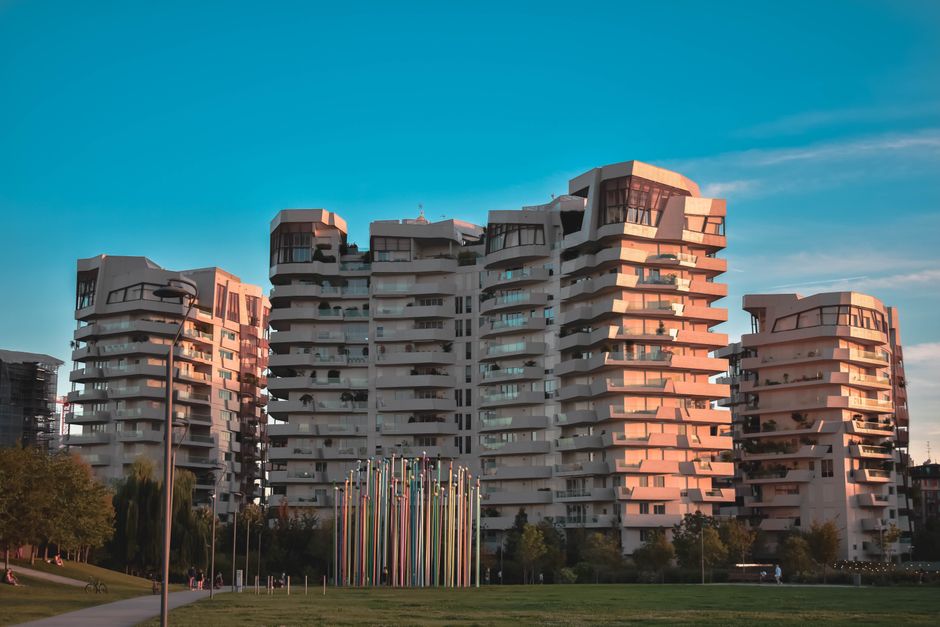
Fashion remains Milan's primary wealth engine, and it shows unmistakably in property demand. The concentration of international headquarters for Prada, Armani, Versace, and emerging luxury brands continues to magnetize senior executives and entrepreneurs seeking Milan bases. This global mobility has fundamentally reshaped buyer profiles. Traditional Italian family purchasers now compete with Russian, Middle Eastern, and Asian investors for trophy addresses along Via Montenapoleone and in Porta Nuova's Vertical Forest district—where architectural prestige commands premium positioning.
Supply constraints amplify prices. Unlike sprawling metropolitan markets, Milan's historic centre offers finite palace conversions and contemporary developments. Navigli's transformation into a fashion-forward neighbourhood has exhausted most developable riverfront space, pushing prices in adjacent Isola and NoLo upward as secondary beneficiaries. Developers increasingly focus on renovation rather than new construction, fundamentally limiting inventory and supporting valuations.
But Milan's luxury market isn't monolithic. Astute buyers now recognize meaningful stratification. A fully renovated Brera two-bedroom commands €900,000–€1.2 million; a comparable space in rising Isola ranges €650,000–€850,000. Buyers seeking exposure to Milan's prestige without peak Brera pricing increasingly find value in neighbourhoods within walking distance of Corso Como and the Garibaldi district—where creative professionals cluster and appreciation momentum remains strong.
What defines today's luxury buyer? Flexibility trumps speculation. Post-pandemic, international purchasers prioritize outdoor terraces, home office infrastructure, and proximity to transport hubs serving Malpensa Airport. Energy efficiency certifications now directly influence valuation, with pre-2005 properties requiring €50,000–€150,000 in compliance upgrades to attract premium buyers. Currency fluctuations significantly impact non-euro purchasers; recent euro strength has modestly cooled international demand, creating tactical windows for patient investors.
The takeaway: Milan's luxury market reflects genuine, wealth-driven fundamentals rather than speculative froth. Buyers should prioritize location granularity—neighbourhood trajectory matters as much as absolute price—and factor renovation reality into assessments. The fashion capital's allure remains intact, but savvy acquisitions now demand deeper local intelligence than ever.
This article was compiled by AI from the sources linked above and screened before publishing. See our editorial standards.