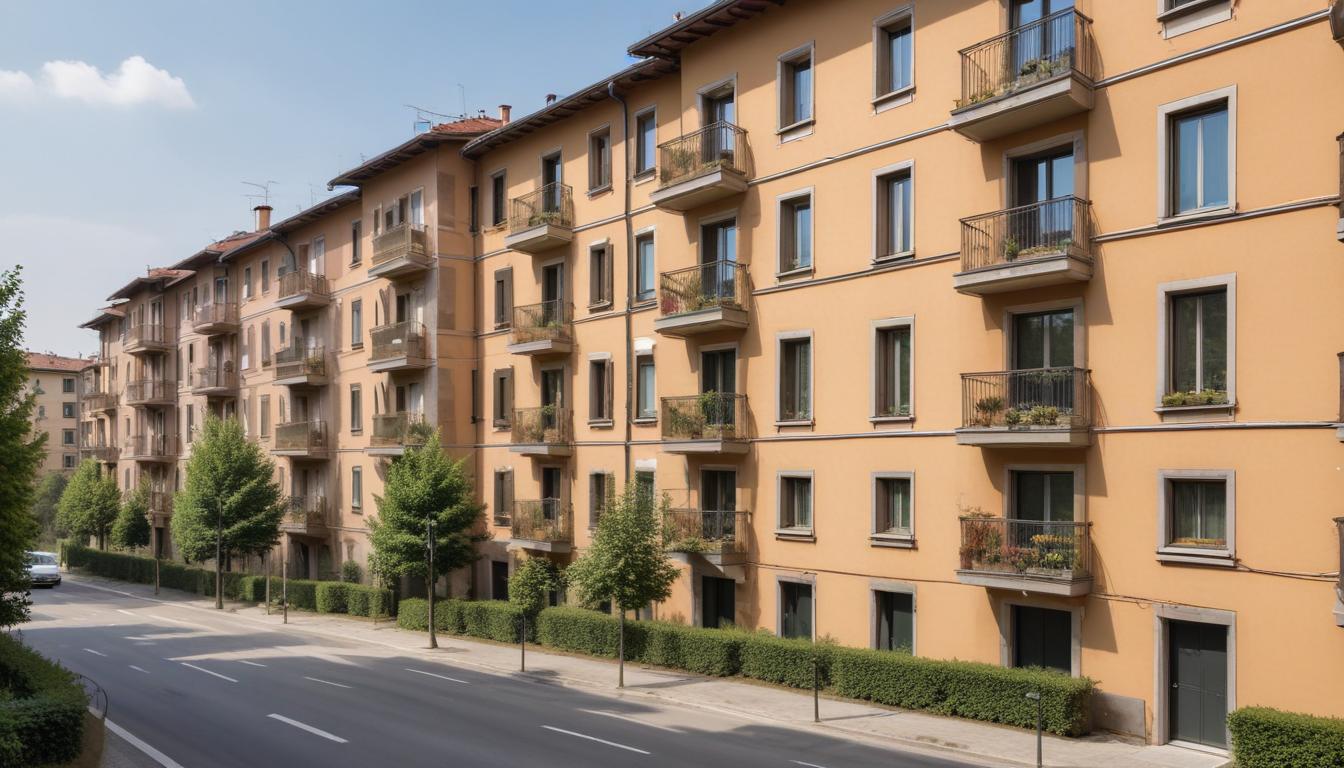
What Milan's shrinking auction inventory is signalling about affordable housing
Price floors rising and sales volumes falling suggest the city's social housing crisis is pushing entry-level stock out of reach faster than policy can respond.
Price floors rising and sales volumes falling suggest the city's social housing crisis is pushing entry-level stock out of reach faster than policy can respond.
Milan's property market is sending a stark message through its auction data: affordable housing is vanishing. Over the past eighteen months, court-ordered property auctions—traditionally a source of discounted entry-level stock—have declined by 34% across the metropolitan area, according to preliminary analysis of aste.it records. Simultaneously, opening bids have climbed an average of 8–12% in traditionally accessible neighbourhoods like Isola, Nolo, and parts of Porta Ticinese.
The shift reveals an uncomfortable truth beneath Milan's luxury veneer. While penthouses in Brera command €8,000–10,000 per square metre and Navigli waterfront properties trade at €6,500–7,500/sqm, the city's working-class neighbourhoods are experiencing the same affordability squeeze. Auction data from properties on Via Pestagalli in Isola and around Piazzale Loreto show opening prices now hovering at €4,200–4,800/sqm—well above the €3,600/sqm floor of five years ago—effectively narrowing the window for first-time buyers dependent on auction leverage.
The Comune's housing assessor office has flagged this pattern in internal memos. Fewer distressed sales mean fewer opportunities for investors and owner-occupiers to secure discounts that once bridged affordability gaps. Meanwhile, private developers, incentivised by rising market values, continue converting rental stock to ownership units across Isola and the Navigli corridor, further tightening rental availability—a critical safety valve for workers priced out of purchase markets.
Milano's social housing providers, including Aler Lombardia and cooperative groups operating out of the Porta Romana district, report increased pressure. Applications for subsidised units have grown 22% year-on-year, even as the stock available remains frozen at roughly 18,000 units citywide. The gap between demand and supply is widening precisely when younger professionals and service-sector workers—the backbone of Milan's functioning ecosystem—can least afford it.
What's particularly telling is where auctions are still available: peripheral areas like parts of Quarto Oggiaro and further reaches of Affori, where €3,200–3,600/sqm entry points persist. But these neighbourhoods lack the transport links, employment density, and urban vitality that made traditionally working-class Milan neighbourhoods liveable propositions for decades.
The policy signal is unmistakable. If auction floors continue rising while inventory shrinks, the city risks naturalising a two-tier housing market: luxury Milan and commuter Milan, with little middle ground. That's not a market correction—it's a structural failure that even favourable interest rates cannot fix.
This article was compiled by AI from the sources linked above and screened before publishing. See our editorial standards.
How does this story make you feel?
Spread the word
About this article
Published by The Daily Milan
Daily brief
Free, in your inbox before 7am. Weekdays.
More in Property