Lambrate: The Industrial Quarter Rewriting Milan's Development Blueprint
Surging approvals and a pipeline of mixed-use schemes are turning this former manufacturing hub into the city's most compelling investment frontier.
Surging approvals and a pipeline of mixed-use schemes are turning this former manufacturing hub into the city's most compelling investment frontier.
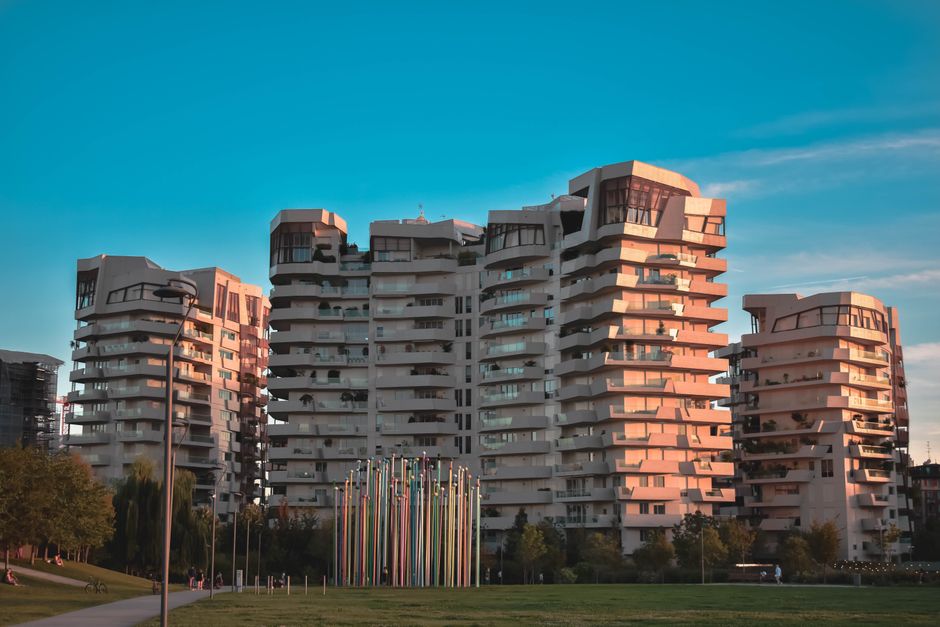
While investors continue to chase premium addresses in Brera and Porta Nuova, where prices now hover near €7,500 per square metre, a more compelling opportunity is unfolding east of the Navigli. Lambrate—Milan's gritty, transforming industrial quarter—has emerged as the city's most dynamic development zone, with planning approvals accelerating and a generation of new residents reshaping its identity.
The neighbourhood's momentum reflects a calculated shift in Milan's urban strategy. Lambrate, historically dominated by workshops and manufacturing spaces along Via Gattamelata and the Navigli branch canal, sat largely dormant through the 2010s. Today, its combination of affordable vacant land (averaging €3,800 per square metre), architectural heritage, and proximity to the thriving Navigli district has catalysed a wave of mixed-use conversions that rival anything in Isola or Nolo.
Recent municipal approvals have fast-tracked several flagship projects. A 14,000-square-metre regeneration scheme near Via Valtellina—once a textile warehouse—secured green-light status in spring 2026, pencilled for completion by 2029. The scheme pairs 120 residential units with ground-floor creative studios and a café anchored to the restored canal frontage. Early pricing sits around €4,200 per square metre, roughly 45 per cent below comparable Navigli product. Similar conversion projects are advancing along Via Conchetta and Via Plebisciti, collectively representing over 600 new homes.
The appeal extends beyond price. Lambrate's industrial aesthetic—exposed brick, high ceilings, loft-style configurations—attracts young professionals and creative professionals drawn to Milan's fashion and design industries. The district's proximity to Centrepoint and the emerging tech hub at Lambrate Station, coupled with improved public transport connections, has energised rental demand. Local estate agents report occupancy rates climbing to 92 per cent, with yields reaching 4.5–5 per cent—notably above central Milan's 3 per cent average.
Planners also recognise Lambrate's role as a release valve for housing pressure. With construction costs absorbed by lower land acquisition, developers can offer units at price points that intermediate buyers—squeezed out of San Babila and Magenta—are beginning to access. The municipality's 2026 spatial masterplan explicitly targets Lambrate as a growth corridor, with further zoning amendments expected by Q4.
For investors monitoring Milan's property cycles, Lambrate represents a textbook value-capture play. The neighbourhood hasn't yet commanded the design credentials or brand prestige of Isola, but infrastructure investment, institutional capital, and a genuine scarcity of developable land suggest that window is closing. Smart money has already noticed.
This article was compiled by AI from the sources linked above and screened before publishing. See our editorial standards.
How does this story make you feel?
Spread the word
About this article
Published by The Daily Milan
Daily brief
Free, in your inbox before 7am. Weekdays.
More in Property