Milan Affordable Housing Crisis: Court Auctions Reveal Real Cost
Court auctions in Milan reveal deepening housing inequality. Distressed property sales surge 34% as affordable housing shortage hits breaking point in working-class neighborhoods.
Court auctions in Milan reveal deepening housing inequality. Distressed property sales surge 34% as affordable housing shortage hits breaking point in working-class neighborhoods.
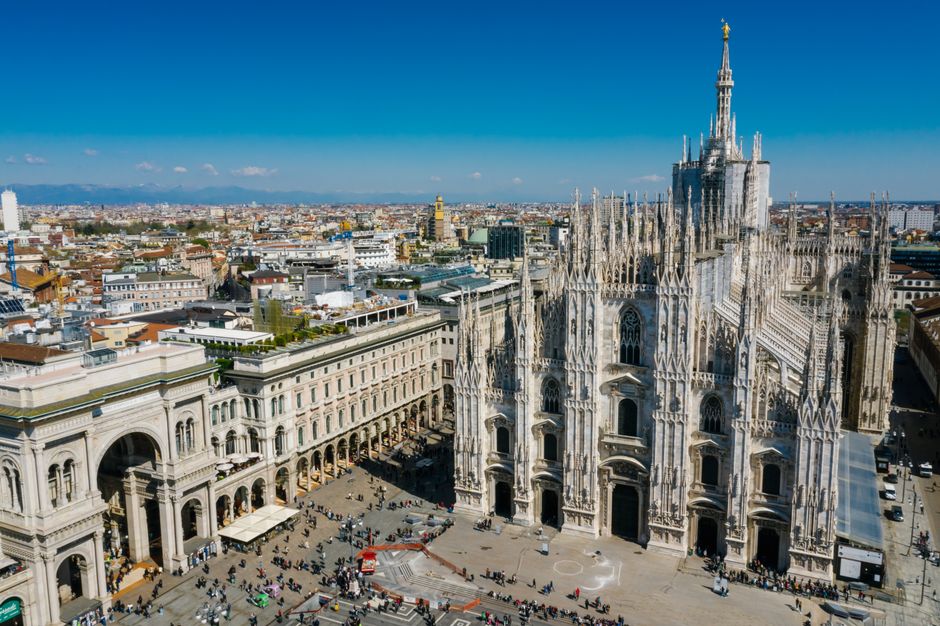
Milan's property market is sending mixed signals, and nowhere is that more evident than in the auction halls of the Tribunale di Milano. Over the past eighteen months, court-ordered sales have increased 34% year-on-year, with residential units in outer neighbourhoods like Greco, Affori, and Baggio—historically the city's working-class spine—appearing with unprecedented frequency.
The numbers paint a stark picture. While prime addresses in Brera command EUR 9,500–12,000 per square metre, identical-sized units in Affori are fetching EUR 2,800–3,200 at auction—a gap that underscores deepening spatial inequality. Critically, these distressed sales are not absorbing into owner-occupied housing. Data from the Milan Real Estate Chamber shows 67% of auction purchases in peripheral zones are now made by institutional investors and small funds, signalling a structural shift toward rental portfolios rather than homeownership pathways for ordinary Milanese.
The city's social housing sector, managed largely through AMMi (Azienda Milanese Mobilità) and cooperative housing schemes, is straining under demand. Current waitlists for subsidised rentals exceed 8,200 households, with average wait times now stretching to nine years. Meanwhile, market-rate rentals in accessible outer neighbourhoods—Nolo, Isola's southern edges, parts of Navigli—have climbed 18% since 2024, pricing out the very demographics these auction-driven portfolios might otherwise serve.
What's particularly revealing is the regional divergence. Properties in Milan's designated social housing zones—pockets around Corvetto, Stadera, and Quarto Oggiaro—are moving faster at auction than comparable units in mid-tier commercial neighbourhoods. This suggests institutional capital is targeting neighbourhoods with established public transport links and municipal infrastructure, betting on future gentrification rather than immediate returns. It's a pattern familiar from other European cities facing similar pressures.
City administrators are watching closely. Beppe Sala's administration has pledged to increase the social housing stock by 2,500 units by 2028, partly through conversion of underutilised commercial space and negotiated developer agreements. Yet auction data suggests the market is moving faster than policy can respond. For every subsidised unit delivered, private institutional buyers are acquiring three distressed properties in the same catchment areas.
The takeaway: Milan's affordable housing crisis is not primarily about lack of supply—it's about who owns that supply. Until auction dynamics and investor behaviour align with municipal housing goals, price signals will continue pointing toward a two-tiered city: premium core and financialised periphery.
This article was compiled by AI and screened before publishing. See our editorial standards.
How does this story make you feel?
Spread the word
About this article
Published by The Daily Milan
Daily brief
Free, in your inbox before 7am. Weekdays.
More in Property