Porta Romana Emerges as Milan's Next Investment Hotspot as Yields Climb Above City Average
As traditional neighbourhoods plateau, savvy investors are turning south—where parking, space, and rental demand converge to deliver double-digit returns.
As traditional neighbourhoods plateau, savvy investors are turning south—where parking, space, and rental demand converge to deliver double-digit returns.
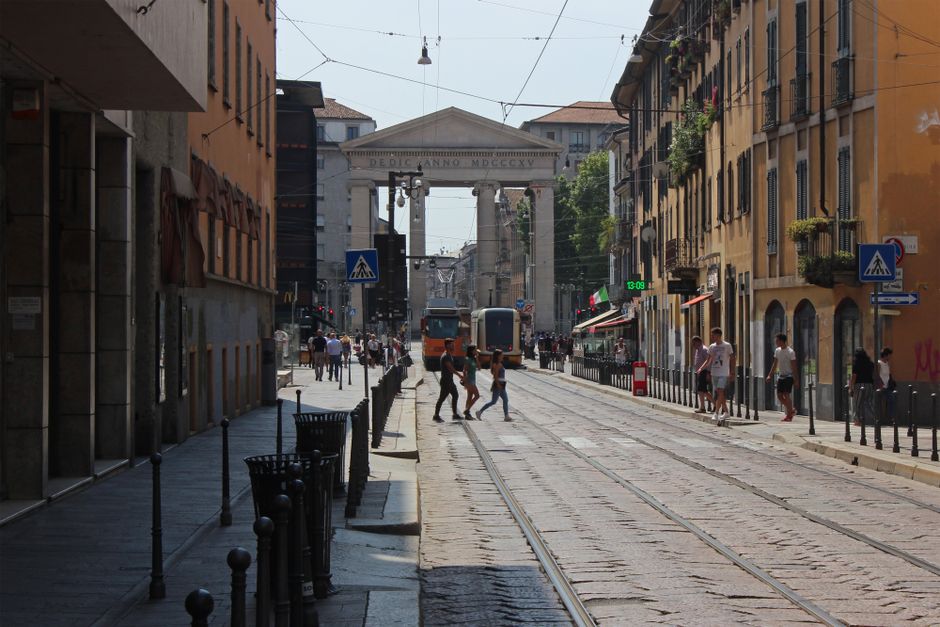
For years, Milan's property conversation centred on the predictable trinity: Brera's heritage charm, Porta Nuova's skyline prestige, and Navigli's nightlife appeal. But as average prices across the city hover near EUR 5,000 per square metre, a quieter district south of the Duomo is capturing sophisticated investors' attention: Porta Romana.
The neighbourhood, anchored by its 15th-century gate and sprawling Basilica di Sant'Eufemia, has long been overlooked as mere residential backdrop. Yet recent market data tells a different story. Properties here trade at EUR 3,800–4,200 per sqm—a 15–20 per cent discount to city average—while gross rental yields consistently exceed 4.5 per cent, well above Milan's sluggish 3.2 per cent median for prime areas.
The shift reflects structural demand. Porta Romana sits equidistant from the financial district (Porta Nuova) and design quarter (Zona Tortona), making it magnetic for young professionals unwilling to overpay for central postcodes. The arrival of independent restaurants along Corso di Porta Romana—including several Michelin-adjacent venues—has transformed the street from quiet thoroughfare into a destination. Meanwhile, the planned metro extension improvements and forthcoming Feltrinelli flagship bookstore near Piazzale Medaglie d'Oro underscore long-term infrastructure investment.
Smart landlords here exploit a crucial advantage: space. A two-bedroom apartment with separate kitchen and small terrace rents comfortably for EUR 900–1,100 monthly; the same layout in Brera commands EUR 1,400 minimum. For investors deploying capital across multiple units, the arithmetic accelerates returns significantly.
Supply constraints reinforce the case. Unlike Navigli, where oversupply of boutique conversions has compressed yields below 3 per cent, Porta Romana remains mostly owner-occupied houses and modest apartment buildings—fewer competing rentals, stickier tenants.
The neighbourhood's working-class heritage also attracts European family units seeking authentic Milan beyond the fashion-industry bubble. A three-year lease here with a mid-market professional family remains far likelier than the transient, high-maintenance turnover plaguing premium areas.
By autumn 2026, expect greater institutional attention. Already, small Milan-based funds are quietly aggregating portfolios in side streets like Via Nino Bixio and Via Torino extensions. Early movers are locking in sub-EUR 4,000 entry prices; wait another year, and the discount likely narrows sharply.
For landlords willing to embrace slightly longer tenant cycles and modest professional management fees, Porta Romana represents the rare Milan opportunity where yield and capital growth still converge rather than compete.
This article was compiled by AI and screened before publishing. See our editorial standards.
How does this story make you feel?
Spread the word
About this article
Published by The Daily Milan
Daily brief
Free, in your inbox before 7am. Weekdays.
More in Property