Milan's Stadiums Are Filling Up — But Who's Actually Getting Fit?
New participation data from Milan's major sporting venues reveals a city more active than its reputation suggests, but with stubborn gaps that urban planners can no longer ignore.
New participation data from Milan's major sporting venues reveals a city more active than its reputation suggests, but with stubborn gaps that urban planners can no longer ignore.
More than 2.3 million individual visits were logged across Milan's five principal sport venues in the twelve months ending June 2026, according to figures compiled by the Comune di Milano's Sport e Benessere directorate. That number — up roughly 11 percent on the pre-pandemic 2019 baseline — is the clearest statistical argument yet that the city's fitness culture has shifted from passive spectatorship toward something more participatory.
The timing matters. With the 2026 FIFA World Cup having placed Milan under the global microscope throughout June, city administrators are under pressure to show that the €185 million spent upgrading San Siro's surrounding infrastructure did more than buff up television backdrops. The real test is whether that investment moved residents off the couch.
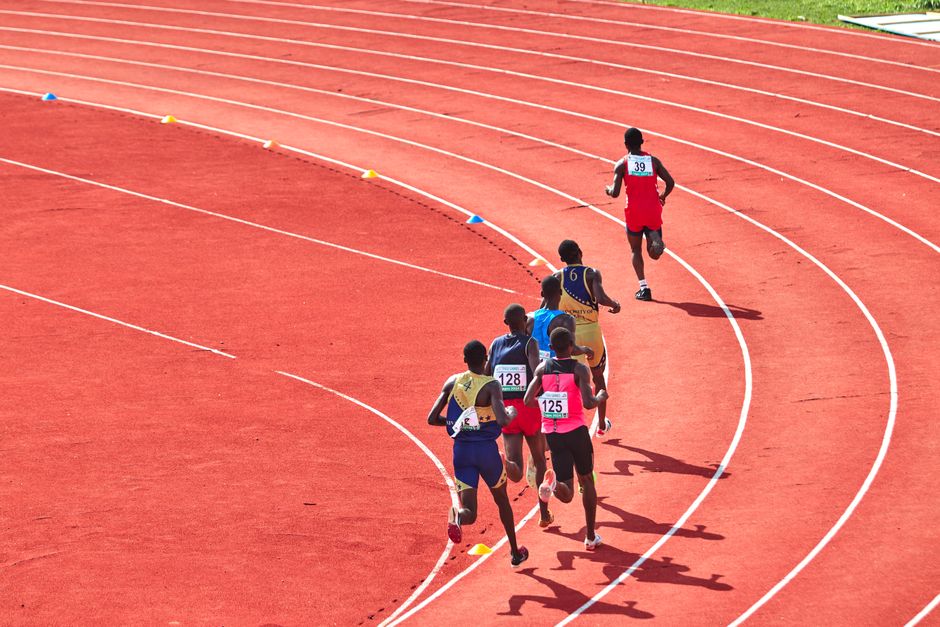
San Siro — officially the Stadio Giuseppe Meazza, sitting on the western edge of the city near the Fiera district — remains the dominant draw, but the headline figure obscures a more interesting story buried in the data. The venue's ancillary facilities, including the refurbished athletics track opened in March 2025, recorded 340,000 public access sessions in the past year. That compares with just 80,000 in 2022, before the track was reclassified as a community asset under the city's Piano Sport 2024-2028 program.
At the opposite end of the city, the PalaLido arena in Lotto has become an unexpectedly reliable indicator of grassroots fitness uptake. Originally built for ice hockey and boxing events, PalaLido shifted aggressively toward group fitness programming in 2023. It now hosts 47 weekly classes ranging from rhythmic gymnastics to functional training, drawing a regular cohort that skews younger and more female than the city's gym sector average. Monthly membership there runs €42, roughly 30 percent cheaper than the midrange commercial gyms clustered around Corso Buenos Aires.
The Centro Sportivo Saini in Viale Corelli, historically associated with track and field, tells a similar story. Participation in its public swim sessions rose 22 percent in the year to June 2026, driven partly by a subsidised program for residents of the Municipio 4 zone introduced in September 2024. That program — targeting households earning below €28,000 annually — has put 4,100 people through structured swim instruction who had not accessed formal sport facilities in at least three years.
Strip away the aggregate optimism, however, and the spatial distribution of activity is uneven. The northern neighbourhoods around Isola and Porta Nuova, which absorbed significant regeneration spending through the Expo legacy projects, show participation rates roughly double those of the south-eastern periphery around Corvetto and Rogoredo. Both areas fall within a fifteen-minute metro ride of major venues, which suggests the barrier is not distance.
Sport sociologists at the Università degli Studi di Milano have been tracking this divergence since 2021, and their working conclusion points to three compounding factors: shift-work schedules that make fixed class times inaccessible, childcare gaps around evening programming, and a persistent cultural association between gym culture and disposable income. None of those problems gets solved by resurfacing a running track.
The city's response, outlined in a July 2026 update to the Piano Sport document, is to push satellite programming outward from the major venues rather than waiting for residents to travel inward. Ten neighbourhood schools in Municipio 6 and Municipio 7 will open their sports halls under a joint agreement with the Centro Sportivo Italiano from September, offering weekend sessions priced at €3 per entry. It is a modest experiment, but one the data suggests is pointed in the right direction.
For residents looking to engage now, the Centro Sportivo Saini accepts walk-in public sessions from Tuesday through Sunday, opening at 7am. The PalaLido fitness schedule is posted monthly on the Comune di Milano's Sport portal, and the subsidised Municipio 4 swim program accepts applications on a rolling basis. None of this requires a World Cup ticket.
How does this story make you feel?
Spread the word
About this article
Published by The Daily Milan
Daily brief
Free, in your inbox before 7am. Weekdays.
More in Sport