Milan's Youth Sport Infrastructure Is Cracking Under the Weight of Demand
From crumbling changing rooms in Quarto Oggiaro to oversubscribed pitches in Porta Romana, the city's grassroots clubs are running out of space — and patience.
From crumbling changing rooms in Quarto Oggiaro to oversubscribed pitches in Porta Romana, the city's grassroots clubs are running out of space — and patience.
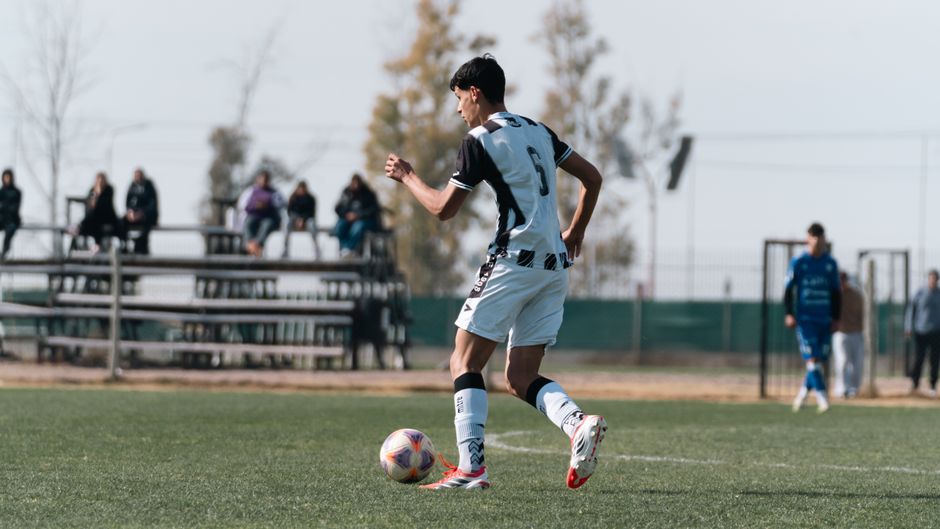
Milan's municipal sports authority, Sport e Salute Milano, confirmed last month that 47 of the city's publicly managed sporting facilities require urgent structural maintenance, with repair costs estimated at €14 million across the next 18 months. For the tens of thousands of children enrolled in grassroots clubs across the city's 88 neighbourhoods, that number is not an abstraction. It is a locked changing room, a waterlogged pitch, a cancelled training session.
The timing matters. The 2026 FIFA World Cup, co-hosted across the United States, Canada and Mexico, concludes this summer, and officials at Comune di Milano had pointed to the tournament as a catalyst for reviving investment in grassroots infrastructure. The legacy investment promised in 2022 has materialised only partially. A €3.2 million tranche allocated to peripheral district facilities was approved by the city council in March 2026, but disbursement to individual clubs has been slow, with several organisations still waiting for the first payment as of early July.
In Quarto Oggiaro, one of Milan's most densely populated northern quarters, ASD Quarto Oggiaro Calcio operates out of the Centro Sportivo Bruzzano on Via Isonzo. The club runs 14 youth teams, from under-7s to under-17s, and shares its two five-a-side pitches with three other associations. The synthetic turf on the main pitch was last replaced in 2019. Club administrators say the surface now poses a minor injury risk and have submitted two separate grant applications to Sport e Salute — both pending. Across the city in Porta Romana, the Associazione Sportiva Dilettantistica Esperia Lombardia, which has run youth swimming and athletics programmes since 1952, recently completed a partial refurbishment of its pool facility on Viale Filippetti after sourcing €480,000 in private sponsorship. The contrast between the two clubs illustrates the central problem: those with the connections and administrative capacity to chase private money upgrade. Those without it deteriorate.
Milan's network of Centro Sportivo Italiano-affiliated clubs, which numbers more than 200 organisations in the metropolitan area, submitted a formal report to the Assessorato allo Sport in April 2026 documenting a 31 percent increase in youth enrolment since 2022 — growth driven partly by post-pandemic recovery and partly by rising awareness of youth mental health benefits linked to organised sport. Infrastructure has not kept pace. The CSI report cited that the average age of a municipal sports facility in Milan is 38 years. Many were built for the 1990 World Cup and have received only cosmetic updates since.
The Comune di Milano's Piano Triennale dello Sport 2025–2027, published last autumn, earmarks €27 million for facility upgrades across the three-year cycle. Priority projects include the complete reconstruction of the Centro Sportivo Olmi in San Siro, a multi-sport hub that currently serves more than 3,000 registered youth athletes, and the renovation of the Piscina Cozzi on Viale Tunisia, whose main pool has been closed for structural repairs since November 2024. Work on Cozzi is scheduled to begin in September 2026, though that date has already slipped once.
For clubs operating right now, the practical reality is one of creative adaptation. Several associations in Corvetto and Gratosoglio — two southern districts with high concentrations of young residents — have negotiated informal time-sharing agreements with local schools to use gymnasia on weekday evenings. It works, but only just: school caretaker overtime costs fall on the clubs, adding roughly €60–90 per session to already tight budgets.
The city's next formal checkpoint is a public hearing at Palazzo Marino scheduled for 17 September 2026, where Sport e Salute Milano will present progress updates on the disbursement timeline and facility prioritisation list. Clubs wanting to register for the second tranche of the 2026 legacy fund must submit documentation by 31 August. The CSI Milano office on Via Arese is offering free administrative support sessions every Tuesday morning through the end of August for clubs navigating the application process.
How does this story make you feel?
Spread the word
About this article
Published by The Daily Milan
Daily brief
Free, in your inbox before 7am. Weekdays.
More in Sport


