Milan's AI Gold Rush: How €200 Million in New Funding Is Reshaping the City's Tech Landscape
A wave of venture capital investment is transforming the Navigli district and beyond, positioning Milan as Italy's artificial intelligence hub.
A wave of venture capital investment is transforming the Navigli district and beyond, positioning Milan as Italy's artificial intelligence hub.
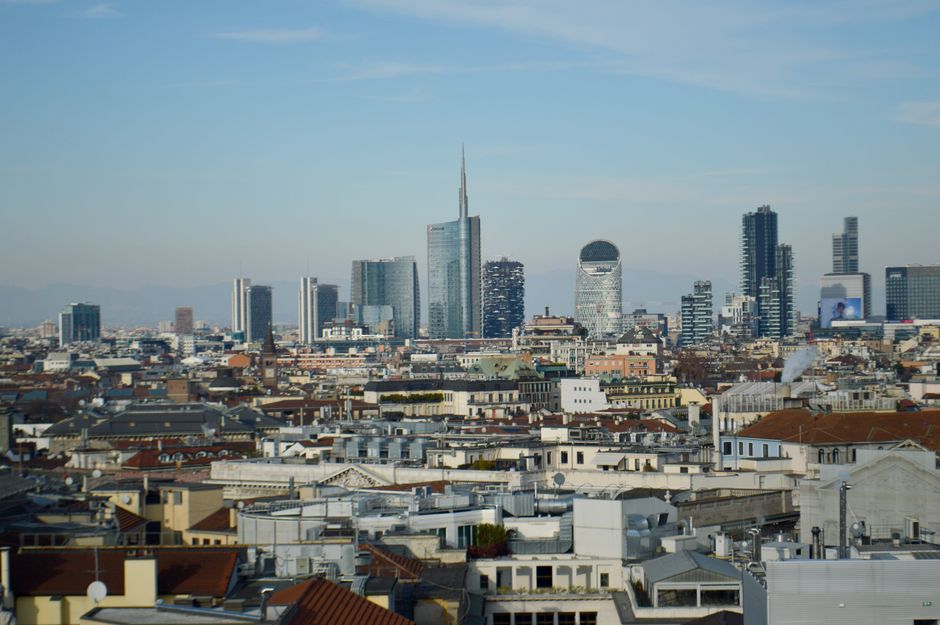
Milan's technology sector is experiencing an unprecedented acceleration. Over the past 18 months, artificial intelligence startups based in the city have attracted more than €200 million in combined funding—a figure that represents a 340% increase compared to the same period two years ago, according to data compiled by local venture tracking firms.
The momentum is reshaping geography and opportunity across the city. The Navigli district, traditionally known for its waterfront charm, has quietly emerged as ground zero for this transformation. Co-working spaces along Via Gaffurio and Vicolo dei Lavandai have filled with machine-learning engineers, computer vision specialists, and founders building applications for supply-chain optimization, healthcare diagnostics, and financial services. A 2,500-square-metre office complex near Porta Ticinese, previously occupied by a design studio, was acquired last autumn by a pooled investment consortium and now houses five AI-focused firms—a microcosm of the broader reshaping underway.
The funding influx reflects confidence in Milan's technical talent and infrastructure. Unlike five years ago, when Italian founders typically relocated to Silicon Valley or Berlin to secure growth capital, institutional investors from San Francisco, London, and Singapore now regularly visit Porta Nuova and the Garibaldi district, where many firms have headquarters. A major European venture fund with €500 million under management opened a Milan office in January specifically to focus on AI investments across the EU.
Real estate costs have surged as a result. Premium office space in the Navigli now commands €950 per square metre annually—up 35% since 2024. Yet this hasn't deterred growth. Employment in AI-related roles across Milan has climbed to approximately 1,800 positions, with salaries for senior machine-learning engineers averaging €85,000—competitive with London and Amsterdam, yet still 20% below San Francisco equivalents.
The economic ripple effects are visible beyond tech sectors. University partnerships have expanded; Politecnico di Milano has received €8 million in fresh funding to establish an AI research centre near its main campus in Città Studi. Local service industries—premium accommodations, executive recruiting, legal advisory—have all expanded to support the influx of international founders and investors.
What remains uncertain is sustainability. Global economic headwinds and recent corrections in AI valuations have prompted caution among some investors. Yet for Milan's business community, the trajectory is clear: the city that built its fortune on fashion and finance is now betting decisively on artificial intelligence.
This article was compiled by AI and screened before publishing. See our editorial standards.
How does this story make you feel?
Spread the word
About this article
Published by The Daily Milan
Daily brief
Free, in your inbox before 7am. Weekdays.
More in tech


