When Alessandra Moretti opened her first flexible office space on Via Torino three years ago, Milan's commercial property market was in freefall. Remote work had hollowed out downtown districts. Landlords were slashing rents by 15-20 per cent, desperate for tenants. The narrative was clear: the office was dead.
Today, Moretti Workspace Solutions operates five premium office hubs across the city—in Brera, Navigli, and the rapidly reviving Porta Romana neighbourhood—and has a waiting list of multinational firms seeking customised workspace. Her success offers a rare bright spot in Milan's otherwise sluggish commercial real estate market, which has seen overall office vacancy rates hover around 12 per cent this year, up from pre-pandemic levels of 7 per cent.
"Companies realised remote work wasn't a long-term solution," Moretti explained during a recent conversation at her flagship location near Piazza Brera. "But they didn't want the old model either—open-plan cubicles, 40-year leases, inflexible layouts. We offered them something Milan was desperate for: purpose-built spaces that adapt to how people actually work."
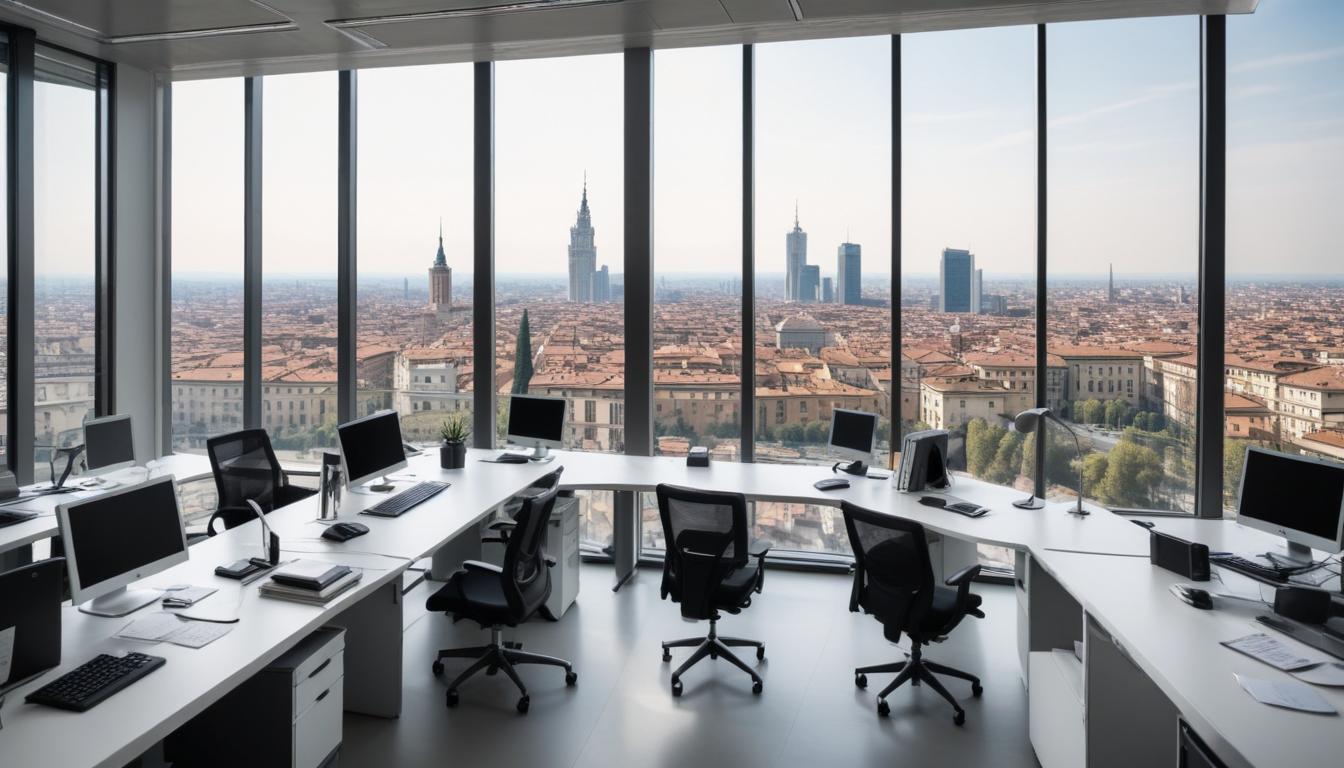
Her facilities feature modular meeting rooms, wellness areas, and high-speed connectivity designed for hybrid teams. Crucially, Moretti negotiated shorter lease terms—typically three to five years—making the model attractive to scaling startups and established firms testing new operational strategies. Monthly desk fees range from €450 to €800, positioning her offering squarely in the premium segment.
The shift reflects broader market realignment. According to Colliers International, Milan's office market is bifurcating: older stock in secondary locations remains troubled, with rents stagnant; but prime-location properties in well-connected zones command premiums, with rates climbing 6-8 per cent annually since 2024. Average asking rents in central districts now sit around €280 per square metre annually—below Paris or London, but significantly above secondary Italian cities.
Moretti's model has attracted investor attention. Her latest expansion, a 3,500-square-metre complex opening this autumn in the Isola neighbourhood, was partially financed by venture capital firms betting on Milan's office renaissance. Local property consultants view her trajectory as evidence that the city's commercial sector is stabilising—not returning to old patterns, but evolving toward more sustainable, flexible arrangements.
As Milan positions itself as Italy's innovation hub, with tech companies and creative agencies migrating from Rome and Bologna, entrepreneurs like Moretti are proving that the office's future isn't obsolescence—it's reinvention.
This article was compiled by AI from the sources linked above and screened before publishing. See our editorial standards.