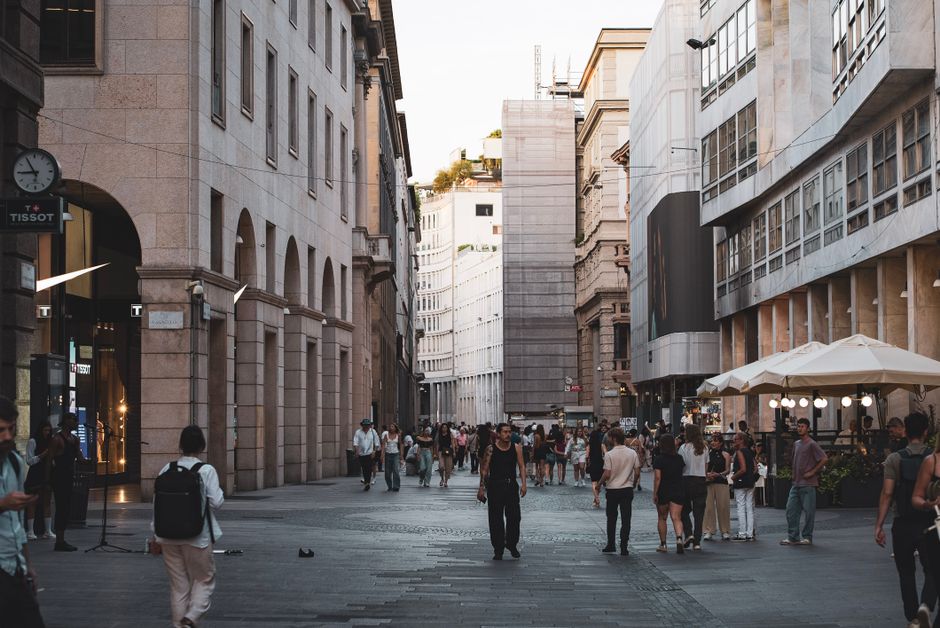
Walk through the showrooms along Via Montenapoleone on any given Monday morning, and you'll see Milan's fashion establishment operating as it always has: impeccably. Yet behind the polished façades, anxiety is mounting. The cascading effects of geopolitical turbulence—from Iranian trade restrictions to Venezuelan currency collapse—are creating unexpected friction in the supply chains that keep the city's €15 billion fashion industry humming.
"We're seeing 12-15 percent cost increases on raw materials within six months," explains an operations director at a mid-sized luxury house in the Brera neighbourhood, speaking on condition of anonymity. "Textiles sourced from traditional suppliers in the Middle East are now facing shipping delays and tariff uncertainties. Margins are under pressure."
The problem is structural. Milan's fashion ecosystem depends on a finely tuned global network: premium fabrics from Turkey and Iran, specialised chemicals from the Gulf states, and cotton inputs through international commodity markets. When geopolitical friction tightens, prices spike. When shipping routes face uncertainty—as they do amid US-Iran tensions—lead times lengthen, forcing companies to hold larger inventory buffers.
The impact radiates outward from fashion into leather goods, footwear, and the industrial machinery sector concentrated around the Lambrate district. Manufacturers of textile equipment, which typically export 70 percent of their output, are reporting weaker order books from Middle Eastern buyers rattled by regional instability. One Monza-based machinery firm noted a 22 percent drop in Iranian inquiries over the past quarter.
At the Fiera Milano, where the city hosts global trade events, organisers are recalibrating their strategies. The September fashion weeks, historically magnets for international buyers, face uncertain attendance from regions experiencing travel disruption or currency pressures. Organisers are pivoting toward digital presentation options and regional buying delegations to mitigate risk.
Yet Milan's business community isn't passive. Several larger houses are diversifying suppliers—adding capacity in India and Southeast Asia, though this requires new relationship-building and quality assurance investment. Smaller producers are forming consortiums to negotiate better freight rates on alternative routes.
"Milan has weathered supply shocks before," notes a trade analyst familiar with the city's textile sector. "But the current moment is different. It's not a single crisis but multiple, simultaneous tensions hitting different nodes of the network."
For now, the city's luxury market remains buoyant. Yet beneath the confidence, Milan's business leaders are quietly preparing for a longer period of volatility—and reconsidering assumptions about globalisation that have shaped the city's prosperity for decades.
This article was compiled by AI from the sources linked above and screened before publishing. See our editorial standards.