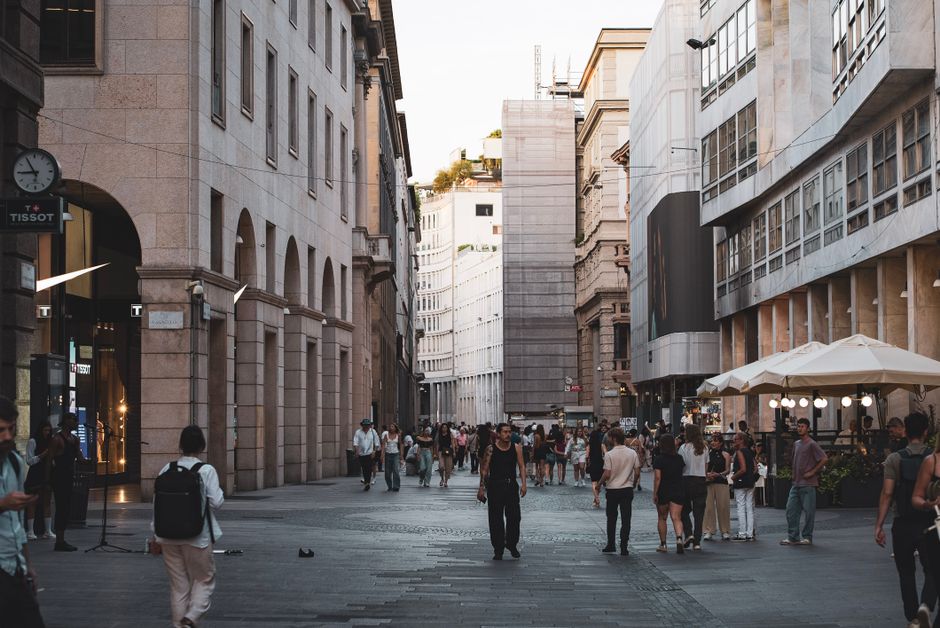
The summer slowdown has arrived early for Milan's hospitality sector, and business owners are bracing for what many describe as the toughest year since the pandemic. From the bustling Navigli district to the high-street boutiques of Via Montenapoleone, retailers and restaurateurs are confronting a volatile mixture of pressures that show no signs of easing before autumn.
Labour costs remain the most immediate headache. Minimum wages across Lombardy have climbed by approximately 8 per cent since 2024, while securing skilled kitchen and front-of-house staff has become increasingly difficult. Hospitality employment agencies report vacancy rates hovering near 15 per cent—nearly double the pre-2020 average. A mid-range trattoria operator on Ripa di Porta Ticinese estimates that wage increases alone have added €45,000 to annual payroll costs, cutting margins that were already compressed.
Energy expenses compound the strain. Gas and electricity costs for restaurant kitchens and retail climate control remain 30-40 per cent above 2019 levels, according to Milan Chamber of Commerce data. While prices have stabilised somewhat, they show little sign of returning to historical norms. A café owner operating three locations across Brera and the Quadrilatero d'Oro reported spending €8,200 monthly on utilities—nearly triple what he paid seven years ago.
Consumer behaviour has shifted markedly. Footfall in Milan's shopping districts declined 6 per cent year-on-year through Q2, while average transaction values in mid-range restaurants have stagnated despite higher menu prices. Affluent diners remain resilient, but the traditionally robust middle-market segment—crucial for volume-driven businesses—shows clear signs of caution. Tourism, which typically sustains the sector through summer months, remains below 2019 peak levels, with conventions and corporate travel spending still recovering.
Supply chain unpredictability persists, particularly for imported ingredients and seasonal produce. Food costs have moderated from 2022 peaks but remain volatile, making menu planning and pricing strategy precarious. Several established establishments have quietly reduced portion sizes or simplified menus rather than absorb further margin erosion.
Industry associations acknowledge the sector faces structural headwinds beyond temporary cyclical pressures. Milan's retail and hospitality ecosystem, which employed roughly 78,000 people pre-pandemic, has not fully recovered employment levels. Digital competition from delivery platforms and online retail continues reshaping demand patterns, forcing businesses to invest in technology just as capital becomes scarcer.
The consensus among operators is cautious: survival through 2026 requires ruthless cost discipline, selective price increases, and operational innovation. For many, the formula that worked a decade ago no longer suffices.
This article was compiled by AI from the sources linked above and screened before publishing. See our editorial standards.