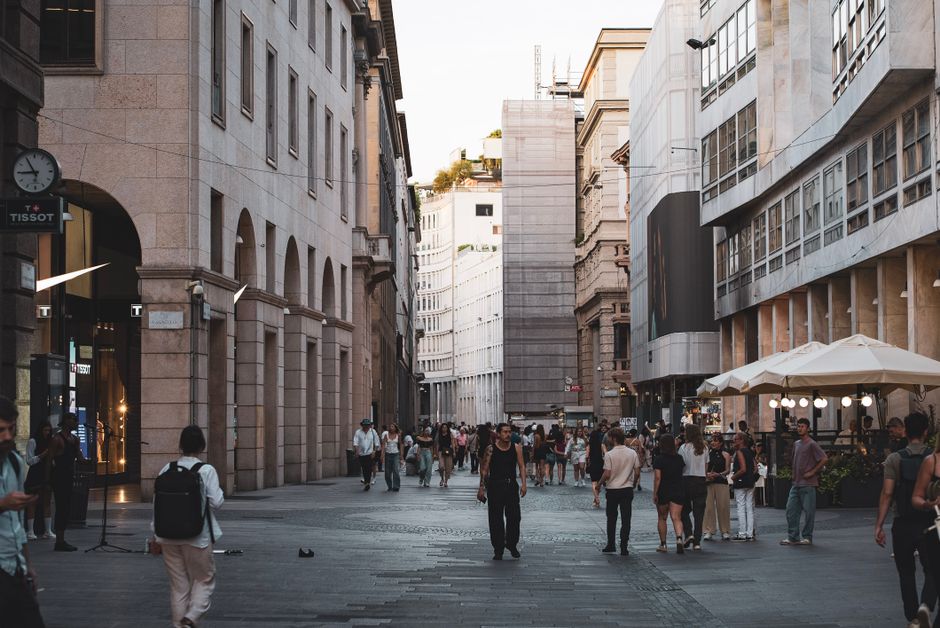
Walk along the Navigli canal on a summer evening and you'll see crowds gravitating toward the cobblestone terraces and vintage storefronts. What many visitors don't realise is that the neighbourhood's reinvention as a destination—not just a local hangout—owes much to entrepreneurs willing to bet against Milan's traditional luxury-first tourism model.
Alessandra Rossi, founder of a network of five independent guesthouses operating across the Navigli, Brera, and Zona Tortona districts, represents a quiet revolution in how the city is packaging itself to international travellers. Rather than compete with the Mandarin Oriental and Park Hyatt for wealthy overnight guests, Rossi's enterprise—which has grown from a single 12-room property in 2019 to a portfolio housing over 200 guests nightly—focuses on immersion and discovery.
"Milan's visitor economy was built on fashion week pilgrims and business travellers," explains the sector's evolution, with 2024 data showing the city welcomed 3.7 million overnight stays, up 12 percent year-on-year. But within that growth sits a telling shift: independent accommodation now represents 18 percent of the market, compared to 9 percent five years ago.
Rossi's properties—each operating under different names tied to their specific neighbourhoods—charge between €80 and €150 per night, undershooting mainstream hotels by 30-40 percent. The model includes curated neighbourhood maps, partnerships with local artisans and restaurants, and staff trained in hyperlocal knowledge rather than standardised hospitality scripts. One property in Brera, steps from the Pinacoteca di Brera gallery, runs a monthly aperitivo event connecting guests with resident artists.
The strategy has caught attention beyond Milan. Her venture recently secured backing from a Turin-based impact investment fund focused on sustainable tourism, and has begun licensing her operational model to cities including Bologna and Rome. Occupancy rates across her Milan portfolio average 78 percent year-round—solid for a mid-market segment that typically hovers at 65 percent.
Local tourism officials have taken notice. The city's visitor bureau now features independent accommodation prominently in promotional materials, a reversal from a decade ago when Milan's narrative centred almost exclusively on luxury retail and design trade fairs.
Whether this signals a lasting reshaping of Milan's visitor economy or a niche success remains uncertain. But as global tourism increasingly fragments into boutique experiences and authentic neighbourhoods, Rossi's bet on the Navigli and beyond increasingly looks like more than just a contrarian wager—it looks like the future.
This article was compiled by AI from the sources linked above and screened before publishing. See our editorial standards.