From Navigli Workshop to Milan's Tech Hub: How One Entrepreneur Is Reshaping the City's Job Market
As Milan's unemployment rate hovers at 7.2%, a homegrown startup founder is bucking the trend by creating skilled positions in digital manufacturing.
As Milan's unemployment rate hovers at 7.2%, a homegrown startup founder is bucking the trend by creating skilled positions in digital manufacturing.

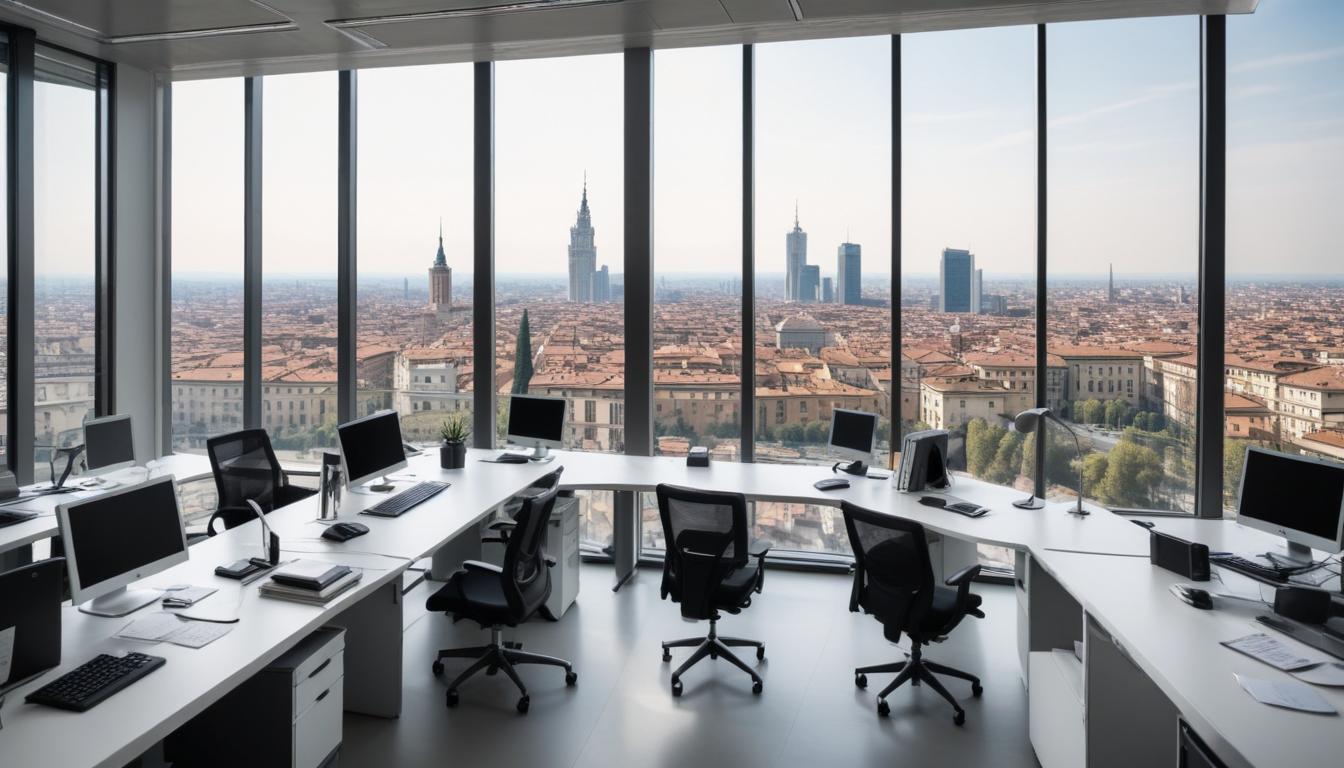
In a converted textile warehouse along the Navigli canal, behind the exposed brick and industrial skylights, Milan's employment landscape is quietly shifting. ArtigianoTech, a five-year-old digital manufacturing consultancy, has grown from a two-person operation to a 47-person team, and its founder is becoming a poster child for how local businesses are adapting to Milan's economic transition.
The company, nestled in the heart of the Navigli district—long synonymous with artisanal craftsmanship—bridges traditional Milanese manufacturing expertise with modern software and automation. It's a microcosm of what local economists say the broader region needs: innovation rooted in heritage industries.
"Milan's manufacturing sector employed 180,000 people a decade ago," explains Marco Bellini, director of the Lombardy Chamber of Commerce. "That number has fallen by nearly 12 percent. What we're seeing now is companies like ArtigianoTech finding the sweet spot between legacy skills and digital demand."
The firm specializes in helping small and medium-sized enterprises—the backbone of Milan's €400 billion regional economy—modernize their production lines. In 2025, it hired 18 new employees, predominantly engineers and software developers, many of whom were previously working for multinational tech companies in northern Europe. Several were actively recruited from within Milan's universities, reversing a brain drain that has plagued the city for years.
The average salary for mid-level technical positions at ArtigianoTech hovers around €42,000 annually, above Milan's median of €38,500, and the company offers remote flexibility—increasingly crucial for attracting talent to a city where commercial rent in the Zona Tortona runs €25-30 per square meter.
What distinguishes this operation is its commitment to apprenticeships. In partnership with Politecnico di Milano, ArtigianoTech runs a two-year program for recent graduates, creating a pipeline of talent while addressing youth unemployment, which stands at 18.6 percent in Lombardy.
"We're not just hiring; we're training the next generation to value both craftsmanship and code," the company's head of operations noted in recent remarks at the Milan Chamber of Commerce forum.
As Milan repositions itself from a manufacturing powerhouse to a hub for creative industries and digital innovation, success stories like ArtigianoTech suggest the path forward isn't wholesale reinvention—it's intelligent evolution. With 23 companies similar in profile currently operating across the Navigli and Lambrate neighborhoods, the question is whether this model can scale city-wide, and whether Milan's unemployment picture will begin to shift accordingly.
This article was compiled by AI from the sources linked above and screened before publishing. See our editorial standards.
How does this story make you feel?
Spread the word
About this article
Published by The Daily Milan
Daily brief
Free, in your inbox before 7am. Weekdays.
More in Business