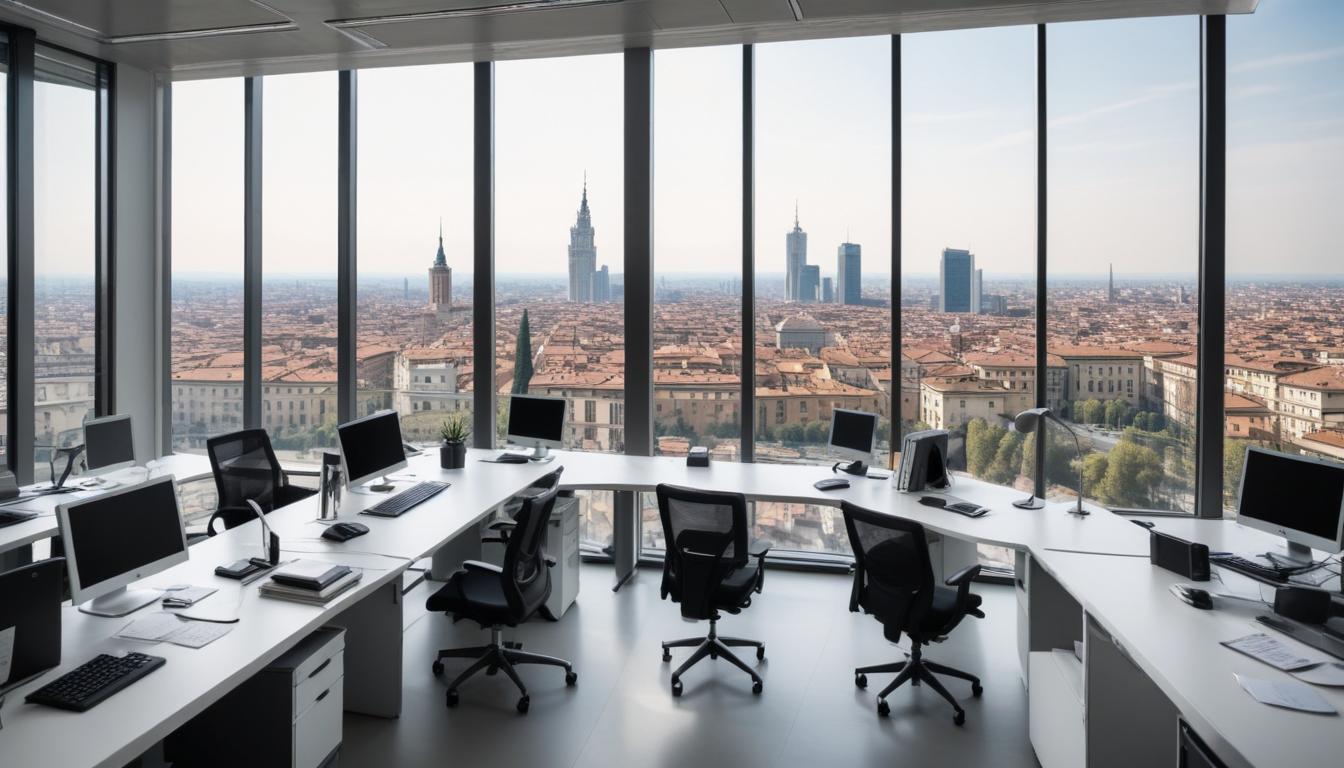
Milan's commercial property market is undergoing a profound realignment that has already created a two-tier landscape: distressed landlords unloading long-term leases, and a emerging class of opportunistic investors reaping significant returns.
The shift reflects a structural change in how major corporations use office space. Where traditional nine-to-five arrangements once dominated, flexible work models have fractured demand for sprawling headquarters. This dislocation has triggered a cascade of subletting, early lease terminations, and fire-sale pricing across premium districts—creating precisely the conditions that attract contrarian capital.
Data from Milan's commercial real estate agencies paint a sobering picture for legacy players. Prime office space in the Brera and Porta Nuova zones—historically commanding €800-950 per square metre annually—has softened to €650-750, with vacancy rates climbing toward 12-15 percent. Yet in pockets like the Navigli district and along Corso Magenta, smaller operators and specialist firms have begun acquiring or subletting these spaces at substantial discounts, transforming them into mixed-use offices, creative studios, and boutique corporate centres.
The real opportunity, however, lies in what comes next. Several institutional investors—including European pension funds and Italian REITs—are quietly acquiring underperforming office blocks with the intention of repositioning them. The logic is simple: as remote work normalises and lease cycles complete, rents will stabilise at new, sustainable levels significantly below pre-2020 peaks. Patient capital buying today at distressed valuations stands to benefit when the market re-equilibrates in 2027-2028.
Porta Romana has emerged as an unexpected beneficiary. Proximity to the Politecnico and a younger demographic have made it attractive to tech companies and media firms downsizing from prestige addresses. Several converted industrial buildings along Via Torino are now nearly fully occupied by design studios and software firms at rents 30-40 percent below comparable space in the city centre.
International firms have also shifted tactics. Rather than locking in 10-year leases for centralised HQs, they now favour shorter-term arrangements across multiple locations—subleasing desks in Duomo-adjacent serviced offices alongside hub spaces in emerging neighbourhoods. This fragmentation benefits intermediaries and flexible workspace operators more than traditional landlords.
The window for opportunistic acquisition remains open but narrowing. By late 2027, consensus forecasts suggest Milan's office market will have found its floor, with yields stabilising around 4-5 percent for prime assets. Those positioning now—particularly those with dry powder and patient capital—are likely to see meaningful capital appreciation within 24-36 months.
This article was compiled by AI from the sources linked above and screened before publishing. See our editorial standards.