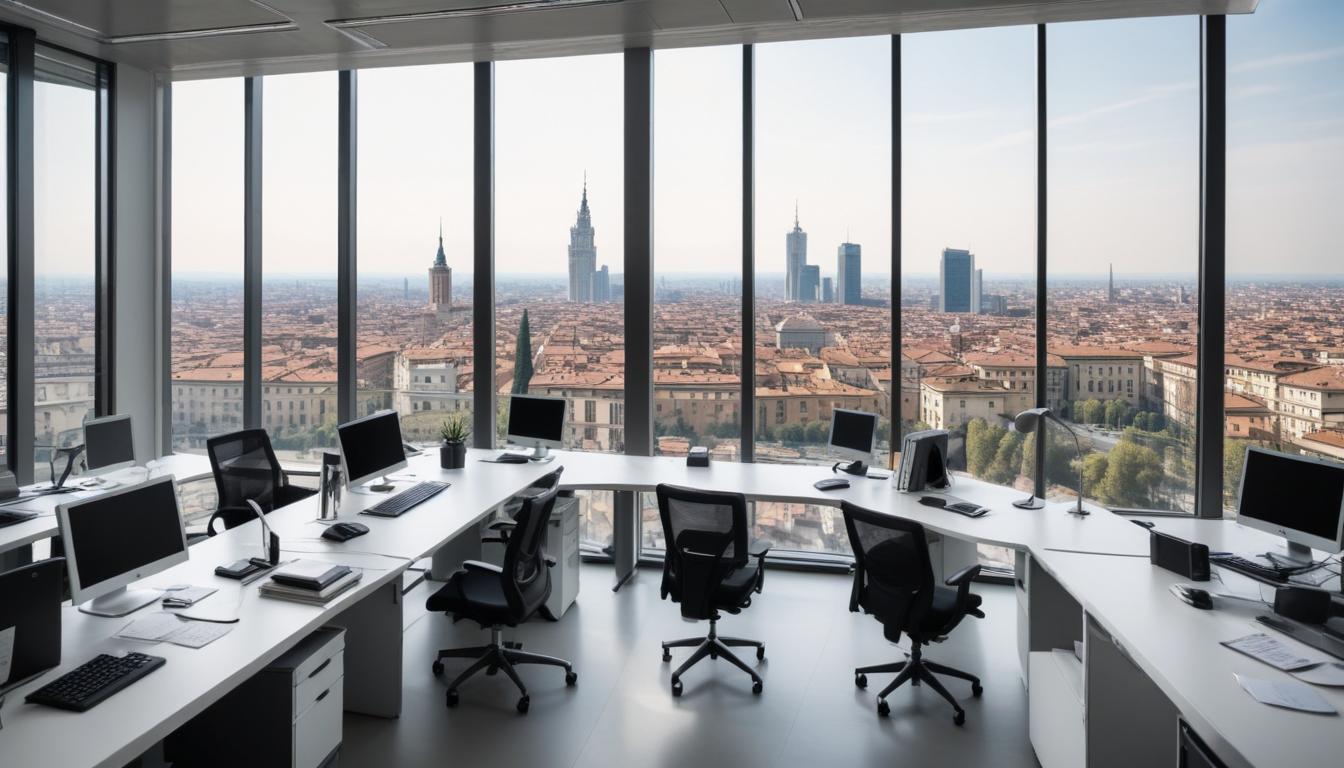
Milan's traditionally rigid office culture is undergoing a seismic shift. Two years into the post-pandemic employment landscape, the city's job market reveals a fundamental recalibration: companies are losing ground to competitors offering remote flexibility, while property owners along Corso Como and the financial district around Via Torino face mounting vacancy pressures.
Data from the Lombardy Chamber of Commerce indicates that 42% of Milan-based firms now operate on hybrid schedules, up from just 8% in 2020. The implications ripple across neighbourhoods. In Porta Nuova, traditionally Milan's prime business hub, commercial office space sits 18% vacant—the highest rate in a decade. Meanwhile, companies competing for talent are offering unprecedented perks: flexible working arrangements, relocation bonuses for those willing to commit to three days weekly in-office, and subsidised co-working memberships in residential areas like Navigli and Zona Tortona.
The shift disproportionately affects junior roles. Entry-level positions in finance, marketing, and tech—historically concentrated in the glass towers near Stazione Centrale—are increasingly dispersed. Younger workers, once eager to climb the corporate ladder in Milan's prestigious headquarters, now weigh office prestige against lifestyle quality. Salaries for mid-level professionals in software development have risen 12% year-on-year, reflecting intense competition for candidates unwilling to commute daily.
Some sectors are adapting faster than others. The creative industries clustered around Brera and the Quadrilatero d'Oro have embraced distributed teams most readily, with agencies now sourcing talent across Italy and beyond. Finance, however, remains more tethered to downtown presence—yet even major banks operating from Via Bocconi are implementing voluntary remote days.
Real estate professionals report growing demand for workspace outside traditional business districts. Co-working spaces in Lambrate and the emerging tech hub near Centrale station are at 89% capacity, suggesting workers seek middle ground: proximity to Milan's energy without daily commutes.
The labour shortage remains acute in skilled sectors. Engineering firms report difficulty filling positions despite competitive compensation, while healthcare and hospitality continue struggling. Milan's unemployment rate sits at 6.2%—below the national average—yet skills mismatches persist.
Looking ahead, employers face a defining choice: invest in reimagined office spaces that justify commuting, or fully embrace distributed models and risk losing their Milan address premium. For now, the city's job market belongs to those flexible enough to adapt.
This article was compiled by AI from the sources linked above and screened before publishing. See our editorial standards.