From Startup to Employer: How This Navigli District Founder Built Milan's Next Tech Hub
As Milan's job market shifts toward innovation sectors, one entrepreneur's scaling success offers a blueprint for the city's economic future.
As Milan's job market shifts toward innovation sectors, one entrepreneur's scaling success offers a blueprint for the city's economic future.

Walk through the Navigli district on any weekday morning and you'll notice something shifting in Milan's economic landscape. Among the historic canals and restored warehouses, a new generation of companies is taking root—and at the centre of this transformation is Carlo Benedetti's TechWeave, a software consultancy that has grown from a three-person operation in 2019 to a 140-strong workforce today.
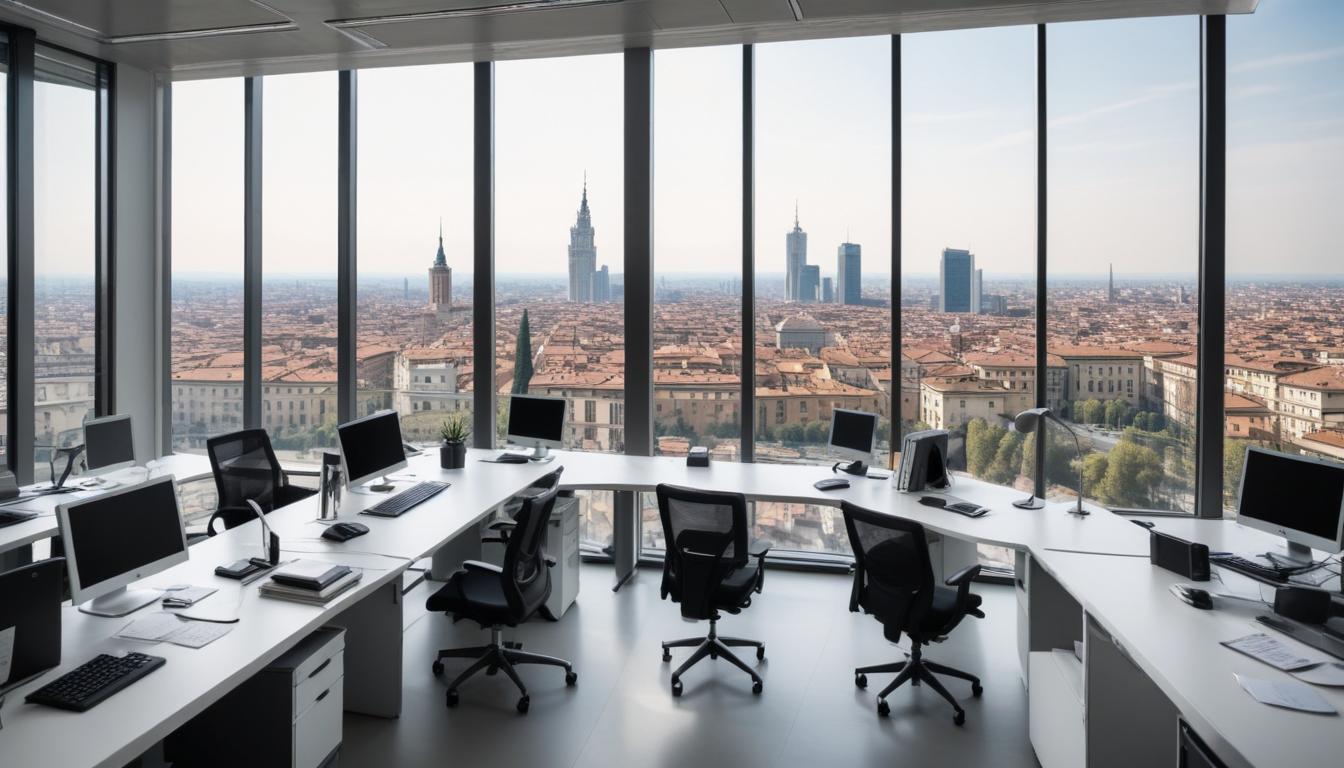
TechWeave's headquarters, nestled in a converted industrial space on Via Vigevano, now employs specialists across AI integration, cloud infrastructure, and digital transformation—sectors that have become critical to Milan's post-manufacturing economy. What makes Benedetti's model noteworthy isn't just the growth rate; it's how the company is reshaping local hiring patterns during a period of significant labour market transition.
Milan's employment landscape has undergone considerable change. According to regional data from Lombardy's Chamber of Commerce, the city has shed approximately 8,000 manufacturing jobs since 2015, even as tech and professional services sectors have expanded by 12 percent annually. The average salary for skilled tech positions in Milan now sits around €52,000—competitive with Rome but trailing Berlin and Amsterdam, creating both opportunity and pressure for local firms competing for talent.
TechWeave's expansion mirrors this broader trend. The company has hired 80 employees in the past eighteen months alone, predominantly from Milan's universities and from elsewhere in Italy seeking opportunity. The firm operates a formal apprenticeship programme in partnership with Politecnico di Milano, placing roughly 15 graduates annually into permanent roles. This approach has become a lifeline for young professionals navigating Milan's competitive entry-level market.
What's particularly significant is TechWeave's commitment to remaining based in central Milan rather than relocating to cheaper suburban corridors. Rising commercial rents—now averaging €400-500 per square metre in the Navigli area—represent a genuine overhead burden, yet the company has doubled down on its location. "We could move to the periphery and save 30 percent on costs," Benedetti has indicated in industry interviews, "but the talent pool, the proximity to clients, and the ecosystem matter more."
This decision carries symbolic weight. As Milan attempts to position itself as Europe's next innovation capital—competing with Barcelona and Copenhagen for tech investment—examples of locally-rooted, scaling companies become proof of concept. The Navigli is becoming shorthand for this transition: less fashion and design, increasingly digital and technical.
For jobseekers and economists watching Milan's trajectory, TechWeave represents both the opportunity and the challenge ahead: enormous growth in new sectors, but success requires skills the local education system is still catching up to provide.
This article was compiled by AI from the sources linked above and screened before publishing. See our editorial standards.
How does this story make you feel?
Spread the word
About this article
Published by The Daily Milan
Daily brief
Free, in your inbox before 7am. Weekdays.
More in Business