Milan's commercial real estate market is experiencing a quiet but profound realignment. After years of uncertainty about office space demand, savvy investors are discovering that the city's property landscape isn't shrinking—it's evolving. And those who understand the shift are already profiting.
The numbers tell a compelling story. While traditional corporate leases have contracted by roughly 12 percent since 2023, according to data from Nomisma, asking rents for premium, flexible office spaces have climbed 8 percent year-over-year. The disconnect is revealing: companies no longer want sprawling floors in tired business parks. They want curated environments in walkable neighbourhoods with character.
The Navigli district offers the clearest example. Once dismissed by corporate tenants as too bohemian, the area is now attracting finance startups and creative boutiques seeking mid-sized offices with ground-floor retail potential. Property developers who acquired older industrial spaces here between 2022 and 2024—when valuations were depressed—are now converting them into mixed-use complexes commanding €550 to €750 per square metre annually. Five years ago, comparable locations traded at €380.
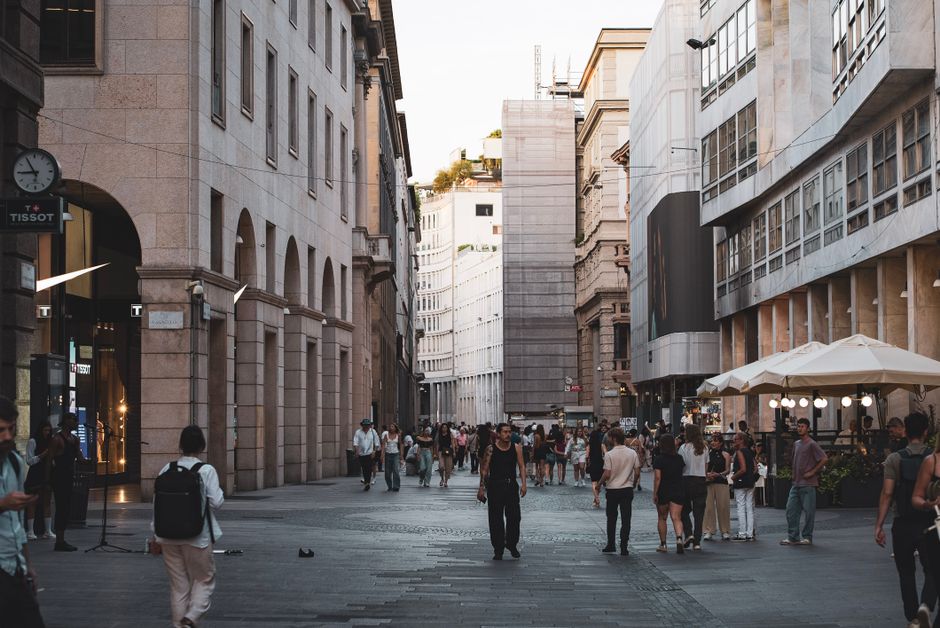
Brera and Porta Venezia tell a similar story. These historically residential neighbourhoods are experiencing a commercial awakening as young professional firms recognize that proximity to cultural venues, quality restaurants, and public transport matters more than proximity to Centrale. Adaptive reuse projects converting nineteenth-century palazzos into 2,000–3,000 square-metre office suites have become the market's fastest-moving segment.
The shift also reflects deeper structural changes. Remote work has normalized flexible arrangements, meaning companies need less space but demand better quality. Sustainability mandates are pushing renovations that older buildings in central locations can support more cost-effectively than suburban properties requiring complete reconstruction. And Milan's positioning as a fashion and design hub—distinct from its industrial legacy—now attracts international creative agencies unwilling to compromise on aesthetic surroundings.
Real estate investors with capital to deploy on refurbishment projects are the primary beneficiaries. Mid-tier funds focused on urban regeneration have raised €300 million collectively over the past eighteen months, targeting precisely this opportunity. Simultaneously, property owners with assets in emerging micro-neighbourhoods are seeing unsolicited acquisition interest rise sharply.
The Porta Garibaldi corridor, traditionally synonymous with old-economy office parks, is also experiencing selective renewal. Developers are subdividing large footprints into smaller, independently-leased units—reducing tenant risk while increasing revenue per building.
For Milan, this represents opportunity disguised as disruption. The city isn't losing its office market; it's acquiring taste.
This article was compiled by AI from the sources linked above and screened before publishing. See our editorial standards.