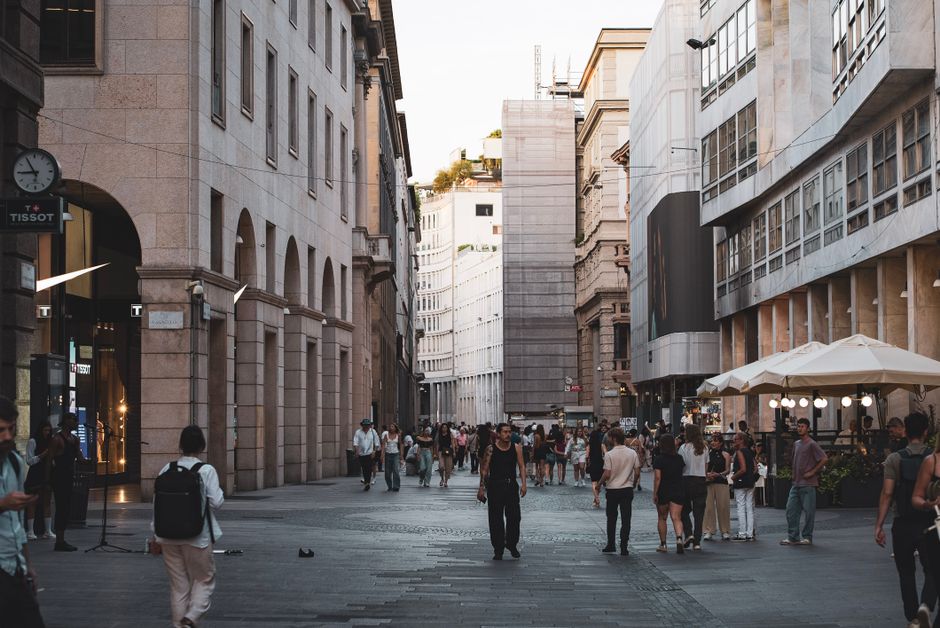
Milan's innovation corridor has long thrived on fashion and design, but a quieter revolution is taking root in the city's eastern quarters. On Via Torino, just steps from the Duomo's shadow, sits the headquarters of SustainaCore—a three-year-old cleantech venture that has quietly become one of Europe's most promising circular-economy players.
Founded by a Milan native with roots in the city's industrial heritage, SustainaCore develops biodegradable composite materials derived from agricultural waste, targeting construction, automotive, and consumer goods manufacturers across the EU. The startup announced today that it has closed a Series B funding round of €45 million, led by Copenhagen-based Nordstjerna Ventures, with participation from existing investors including Italian family offices and the European Innovation Council fund.
The timing reflects Milan's evolution. Once dependent on traditional design sectors, the city's startup ecosystem has matured significantly. According to StartupBlink's 2025 index, Milan now ranks among Europe's top twenty startup hubs, with particular strength in sustainability tech. Last year, cleantech ventures operating from the city attracted over €180 million in venture capital—a 34 percent increase from 2024.
SustainaCore's growth exemplifies this shift. Operating from a converted warehouse in Porta Romana, the company has grown from eight employees to seventy in just thirty months. Its R&D laboratory, housed nearby in the CityLife district near the Biblioteca degli Alberi, partners with Politecnico di Milano's Materials Science department.
The startup's success reflects changing market dynamics. European manufacturers face mounting pressure to meet the EU's circular-economy directives, creating demand for alternatives to conventional plastics and carbon-intensive composites. SustainaCore's materials are priced competitively—roughly 15-20 percent above standard alternatives—while cutting embodied carbon by up to 60 percent.
The funding round will accelerate scaling across three fronts: expanding manufacturing capacity at its production facility in Lombardy's industrial heartland, launching pilot programs with major automotive suppliers, and opening a second R&D hub in Berlin.
For Milan's broader business community, SustainaCore's trajectory signals opportunity. The city's combination of design expertise, proximity to manufacturing bases, and proximity to venture capital—bolstered by the growth of funds operating from Navigli and the financial district—creates genuine competitive advantage in sectors beyond traditional luxury goods.
As geopolitical tensions and climate imperatives reshape global supply chains, Milan's entrepreneurs are positioning the city not as a heritage destination, but as a launchpad for solutions the world needs tomorrow.
This article was compiled by AI from the sources linked above and screened before publishing. See our editorial standards.