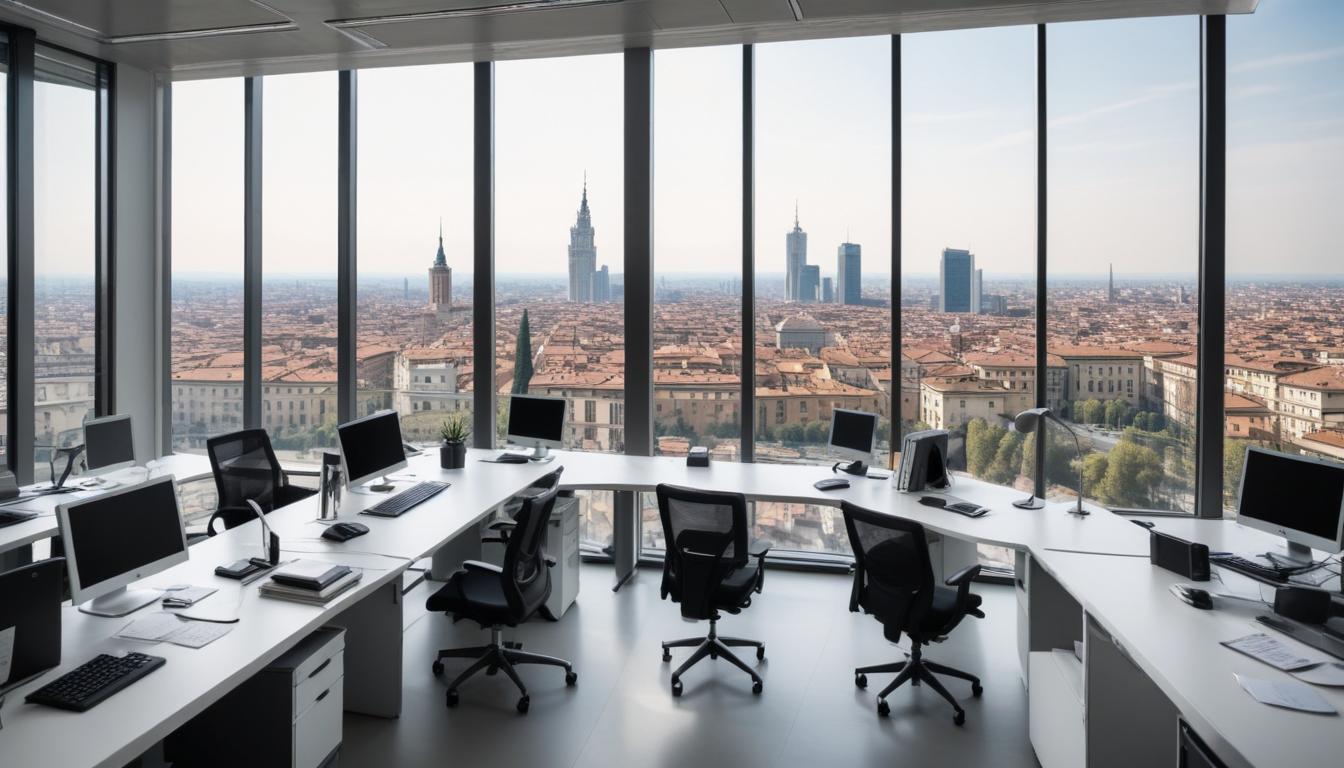
Walk into any aperitivo crowd around Porta Ticinese these days, and you'll hear it: Milan's job market is tightening. Unemployment across Lombardy has crept toward 7.2% in recent months, and youth joblessness—particularly in the services sector—has begun to worry local policymakers. Yet in a converted warehouse just off Via Ascanio Sforza, one company is hiring at a pace that suggests a very different economic reality.
Netstream, a mid-sized artificial intelligence and data analytics firm founded in 2018, has grown from 34 employees to over 220 in just four years. The company, which helps financial institutions and insurance firms optimize their operations, occupies three floors of a historic Navigli-area building and is actively recruiting software engineers, product designers, and business development specialists. Entry-level positions start at €28,000 annually—well above the regional median for comparable roles—while senior engineers command packages exceeding €65,000.
"We're proof that Milan doesn't need to compete on cost," says the firm's operations director, speaking on background. "We compete on talent density and proximity to capital markets. That's our moat."
The numbers tell a story worth examining. Milan's broader employment landscape has been uneven. The fashion and luxury goods sectors—traditionally the city's economic backbone—have shed roughly 4,200 positions since 2023, according to Confindustria Lombardia data. Tourism and hospitality have recovered post-pandemic, but wage growth has stalled. Manufacturing in the hinterland continues to contract.
Yet digital services, fintech, and software development have become a pocket of genuine expansion. Netstream is not alone: firms like Satispay and dozens of smaller tech shops across the Isola district and along the Navigli corridor have been aggressively staffing up, lured by Milan's educated workforce, venture capital proximity, and proximity to Switzerland's financial hub.
The city's response has been measured. The Camera di Commercio di Milano has launched initiatives to connect job seekers with tech employers, while Politecnico di Milano and Università Bocconi have expanded computer science and data science programs. Still, gaps remain: skilled mid-career professionals, particularly those with domain expertise in finance or insurance, remain scarce.
For now, Netstream and its cohort represent Milan's emerging economic identity—one less dependent on heritage brands and more tethered to innovation, data, and services that can scale globally. Whether this trend insulates the city from broader regional slowdowns remains an open question.
This article was compiled by AI from the sources linked above and screened before publishing. See our editorial standards.