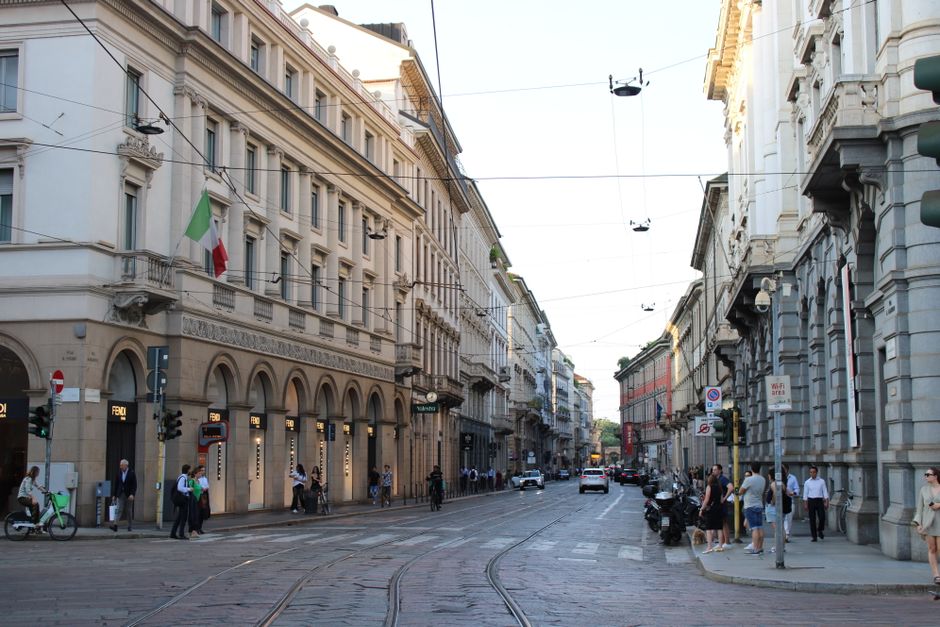
Walk down Via Torino on any Thursday evening and you'll witness Milan's quietly radical food revolution. What began three years ago as informal pop-ups in Navigli warehouse spaces has evolved into an organised movement that's fundamentally rewiring how the city eats, gathers and thinks about hospitality.
The shift is palpable in neighbourhood collectives like Spazio Nuovo, established in 2024 in the Isola district, where a rotating collective of eleven independent chefs operate a shared kitchen on a non-profit model. There are no reservations, no dress codes, no prix-fixe menus—just €18-28 per person for whatever the evening's cook decides to prepare. Since opening, Spazio Nuovo has served over 8,000 diners, 67% of whom are first-time visitors to the Isola area.
This represents a seismic departure from Milan's centuries-old fine dining establishment. The city's Michelin-starred institutions have dominated the conversation for decades, with tasting menus averaging €160-280 per person. Yet data from Milan's Chamber of Commerce shows that neighbourhood trattorias and community-run kitchens have grown by 34% since 2023, while reservations at haute cuisine restaurants have plateaued.
What's driving the shift? Community organisers point to the Mangia Insieme collective—an informal network of roughly 200 chefs, food activists and residents—who began meeting in 2023 to critique Milan's restaurant geography. They observed that entire neighbourhoods like Lambrate and Greco lacked accessible dining spaces, forcing residents to travel to the Duomo district or Brera for any culinary scene. The movement demanded change.
The results are visible across the city. Lambrate's Cucina Aperta, which opened last September, operates on a communal model where diners contribute €3 per hour toward kitchen costs. Greco now hosts monthly neighbourhood dinners in a reclaimed factory space on Via Thaon di Revel. These aren't chef-driven vanity projects; they're infrastructure designed by residents, for residents.
Yet tensions persist. Traditional restaurant owners argue that non-commercial models create unfair competition. The Milan City Council is currently debating new licensing frameworks to accommodate community kitchens without compromising health standards.
What's undeniable is this: Milan's eating culture is no longer dictated from above. A generation of chefs and organisers have decided that food, connection and neighbourhood identity are inseparable—and they're rebuilding the city's culinary landscape to prove it.
This article was compiled by AI from the sources linked above and screened before publishing. See our editorial standards.