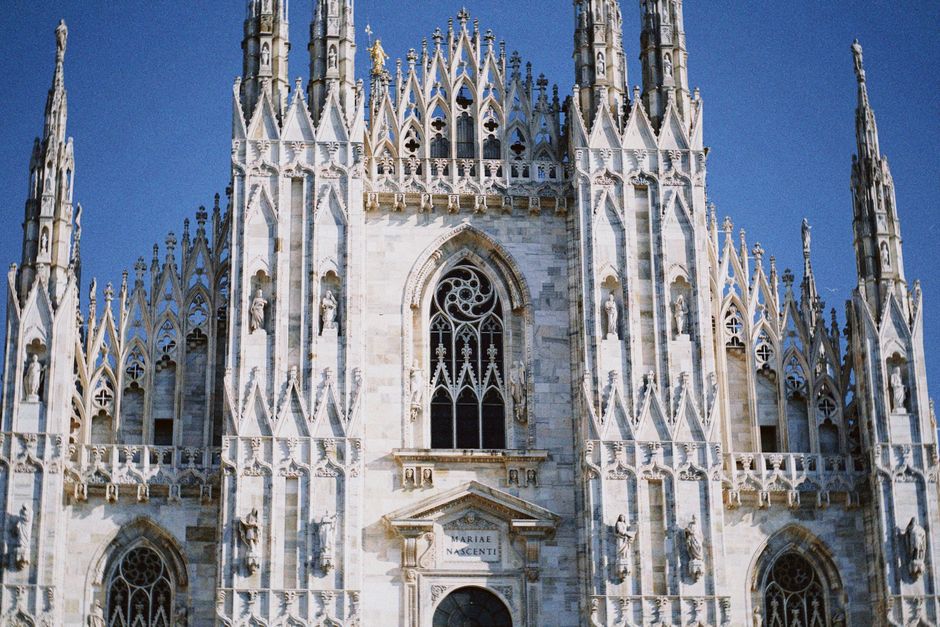
Milan's reputation as a visual capital—built on fashion weeks, design fairs, and a skyline that has changed more in the past decade than in the previous five—now faces a quieter but consequential challenge: what to do when duplicate images flood the city's official and commercial visual archives, eroding the authenticity that makes those images valuable in the first place.
The issue has sharpened in 2026, with the Milan-Cortina Winter Olympics less than six months away and city institutions under pressure to present a coherent, legally clean visual identity to a global audience. Organising bodies, tourism boards, and the municipality's own communications directorate are each holding stockpiles of photography commissioned across multiple campaigns—many of which overlap, duplicate, or outright replicate one another across different licensing agreements.
Why This Moment Is Different
Two forces have converged to make the problem urgent. First, AI-assisted image detection software—tools now widely used by Getty Images and Shutterstock—has become precise enough to flag near-identical photographs as duplicates even when shot on different days, at different focal lengths, from marginally different angles. Second, Milan's Comune has been consolidating its digital asset management ahead of the Olympics under a broader smart-city initiative linked to the Piano Urbanistico Generale adopted in 2023. That consolidation process is exposing redundancies nobody previously had an incentive to audit.
The practical stakes are significant. A duplicated image used across two separate licensing agreements can expose an institution to copyright disputes, particularly when one of those agreements is with an international wire service. For a city whose fashion and design economy generates an estimated €8.8 billion annually—according to figures the Comune di Milano cited in its 2025 economic outlook—the reputational cost of a visual rights dispute in the months before a global event is a risk no communications director wants to carry.
Specific flashpoints have emerged in the Navigli district and around Piazza Gae Aulenti in Porta Nuova, two locations that appear with disproportionate frequency in both the Comune's official archive and in imagery commissioned separately by organisations including the Camera Nazionale della Moda Italiana and Fondazione Milano Cortina 2026. Navigli's canal-side aesthetic has been photographed so exhaustively that distinguishing licensed originals from near-duplicates now requires frame-by-frame metadata analysis rather than visual inspection alone.
The Decisions That Will Define What Comes Next
Three choices are now sitting on desks across the city. The first is technical: whether to adopt a unified digital asset management platform across the Comune, Fondazione Milano Cortina 2026, and the metropolitan tourism body, YESMILANO. A consolidated system would assign each image a unique identifier at the point of commission, flagging duplicates before they enter circulation rather than after. Several European cities, including Amsterdam and Copenhagen, have moved to centralised creative asset registers for exactly this reason.
The second decision is contractual. The city's procurement office must decide whether future photography commissions for public campaigns will include explicit clauses prohibiting near-duplicate submissions—a standard that the European Broadcasting Union has already built into its own visual content contracts. Without such language, photographers and agencies face no formal disincentive to resubmit lightly altered versions of existing work.
The third, and most politically sensitive, is jurisdictional. Lombardy's regional government and Milan's centre-left city administration have not always coordinated cleanly on cultural infrastructure, and the question of who owns visual assets commissioned under joint funding arrangements—particularly those tied to Olympic programming—remains unresolved. Legal clarity on that point needs to come before October, when the first major pre-Games promotional campaigns are scheduled to launch.
The practical path forward is not complicated, but it requires decisions that have so far been deferred. A working group involving the Comune's digital transformation office, Fondazione Milano Cortina 2026, and at least one independent intellectual property lawyer needs to convene before the end of July. The cost of that process is minor. The cost of ignoring it—measured in disputed rights, pulled campaigns, and the kind of reputational friction that a city staking its global moment on visual storytelling cannot afford—is not.