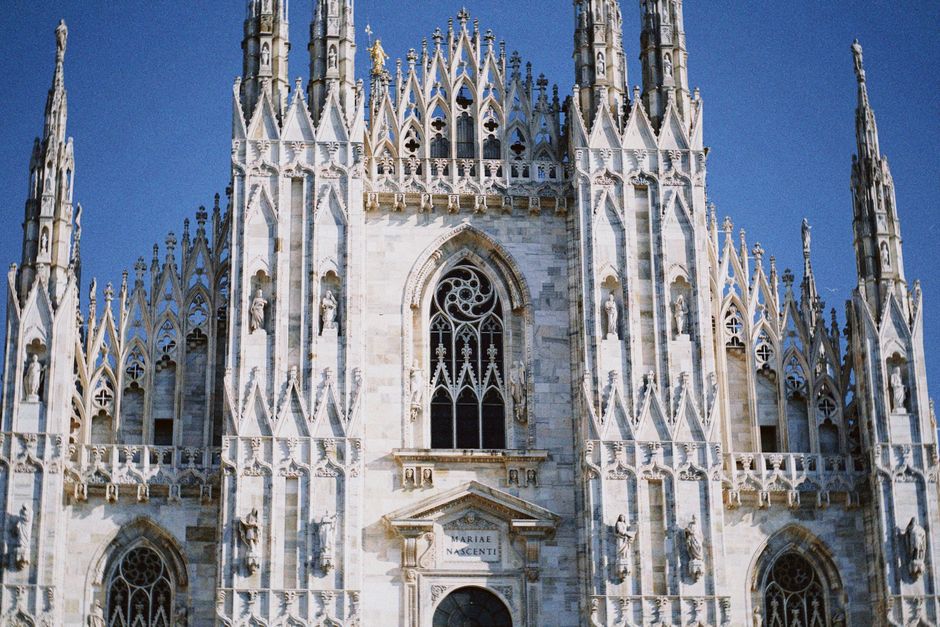
Milan's communications offices, tourism boards, and municipal agencies are sitting on a problem that has been building since at least 2019: the same dozen or so images of the city appear, almost interchangeably, across hundreds of official websites, event promotional materials, and press releases. The issue came into sharp focus this spring as Milan-Cortina 2026 Winter Olympics organisers accelerated their public-facing media campaign, only to find their own promotional assets mirroring imagery already used by Comune di Milano, the Lombardy Region's tourism arm Explora, and half a dozen fashion houses running institutional advertising.
The timing matters. With the Olympic opening ceremony scheduled for February 6, 2026 — and global media attention already building — the city's image infrastructure is under more scrutiny than it has been in a generation. Duplicate imagery is not merely an aesthetic inconvenience. It creates legal exposure under Italian copyright statutes, muddles brand distinction between competing stakeholders, and, for a city whose economy is anchored in design and fashion, sends a signal that cuts directly against Milan's self-projection as the world capital of visual creativity.
A Problem Decades in the Making
The roots go back further than the Olympics planning cycle. Throughout the 2010s, the rapid development of the Porta Nuova district — the Varesine, Gioia, and Isola sub-zones that transformed the skyline north of Piazza della Repubblica — generated a wave of striking architectural photography. The Bosco Verticale towers, completed in 2014 and designed by Boeri Studio, became instant shorthand for a modernising Milan. Within eighteen months of their completion, the same aerial shot of the twin residential towers draped in greenery had been licensed, re-licensed, and in many cases simply appropriated by organisations ranging from the Camera Nazionale della Moda Italiana to regional health authorities illustrating unrelated infrastructure announcements.
The Navigli waterways suffered the same fate from the opposite direction. Golden-hour canal shots, almost always framed from the corner of Via Corsico and the Alzaia Naviglio Grande, became so ubiquitous in Milan tourism content that by 2022 the city's own Ufficio Stampa was internally flagging duplications between its own quarterly publications. A 2023 audit conducted for the Comune — the results of which were reported by Corriere della Sera without specific figures being made public — reportedly identified significant overlap across official digital assets, though the precise scale was not disclosed.
Stock photography platforms compounded the issue. A single licensing agreement struck between a major international image agency and multiple Milan-based public bodies meant that, legally and contractually, the same photograph could appear simultaneously on the website of Fondazione Fiera Milano, a Piazza Affari financial services firm, and a Porta Venezia neighbourhood association newsletter — with no party in breach of any agreement, and no mechanism to flag the collision.
What the Olympics Deadline Has Forced
The Milan-Cortina 2026 organising committee, Fondazione Milano Cortina 2026, began a systematic image audit in late 2025 specifically to ensure its promotional library was differentiated from municipal and regional visual communications. That process surfaced the scale of the duplication problem across the broader ecosystem for the first time in a structured way. It also prompted conversations between the Fondazione and the Lombardy Region — whose centre-right administration has at times been at institutional odds with centre-left Mayor Beppe Sala's city government — about coordinating visual identity standards ahead of the Games.
Organisations managing image libraries are now moving toward what communications professionals in the sector describe as a clearance-first workflow: no image enters a public campaign without a cross-reference check against a shared registry. The Politecnico di Milano's design faculty has been consulted on building such a registry framework, according to reporting by Il Sole 24 Ore earlier this year, though no formal contract has been publicly announced.
For smaller cultural institutions — the galleries along Corso di Porta Ticinese, the independent design studios clustered around BASE Milano in the Tortona district — the practical advice from intellectual property lawyers has been consistent: commission original photography now, before February's spotlight makes the problem impossible to ignore, and before enforcement of image rights becomes a live commercial battlefield in one of the world's most watched cities.