Milan Institutions Face Critical Decisions on Managing Public Image Assets
From the Porta Nuova skyline to the Brera design district, Milan's institutions are facing urgent choices over how to manage, replace and protect their public image assets.
From the Porta Nuova skyline to the Brera design district, Milan's institutions are facing urgent choices over how to manage, replace and protect their public image assets.
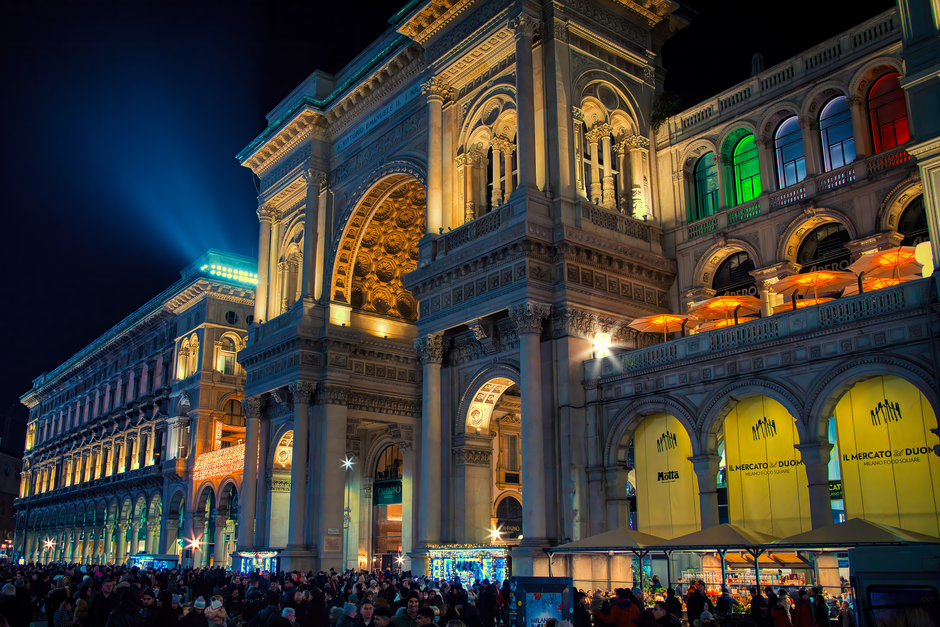
Milan is confronting a problem it can no longer defer. Across the city's major cultural, commercial and municipal institutions, duplicate and outdated image assets, photographs, renderings and archival visuals used in everything from tourism campaigns to Olympic planning materials, have accumulated to a degree that is now forcing a reckoning. The question is not whether to act, but how fast, at what cost, and who bears responsibility.
The timing matters. With the Milan-Cortina 2026 Winter Olympics now months away, the Fondazione Milano Cortina 2026 is under particular pressure. Promotional materials distributed to international media partners are expected to reflect a coherent, current visual identity for the city. When duplicate or mismatched images circulate, showing, for instance, the old Porta Nuova construction phase alongside completed towers, or stale renderings of venues that have since been modified, the reputational cost is immediate and measurable in media coverage that shapes visitor expectations.
Two zones are drawing the most attention internally. The Porta Nuova district, Milan's most photographed skyline transformation of the past decade, presents a case study in image management failure: renderings commissioned between 2018 and 2021 by multiple separate agencies remain in active circulation, many of them depicting a site plan that no longer matches the finished environment around Piazza Gae Aulenti. The Comune di Milano's communications directorate is understood to be auditing its digital asset library, though no formal timeline for completion has been confirmed publicly.
The Brera Design District, which hosts more than 600 participating studios and showrooms during Fuorisalone each April, faces a parallel challenge on a commercial scale. Design studios and their PR agencies routinely pull images from shared press portals, and duplicate files, sometimes differing only in compression quality or metadata, inflate archives and lead to the wrong version appearing in international design publications. The district's coordinating body, Brera Design District APS, updated its media portal guidelines ahead of the April 2026 Fuorisalone, though whether those changes are being enforced consistently across member organisations remains an open question.
Three decisions will define what happens next. The first is whether the Comune di Milano moves toward a single, city-wide digital asset management platform, a step that would require coordinating across departments that have historically operated separate systems. Several European cities, including Amsterdam and Copenhagen, consolidated their municipal image libraries in the early 2020s, reducing duplication and licensing disputes in the process. Milan has no equivalent unified infrastructure as of mid-2026.
The second decision concerns licensing. Many of the duplicate images in circulation exist partly because licensing terms were not clearly attached to original files, allowing downstream reuse without version control. A review of standard contract terms, particularly for photographers commissioned by public bodies such as MM SpA, the municipal utility company that has documented infrastructure projects along the Navigli canals, could close that gap before the Olympic period peaks in late 2026.
The third, and most politically charged, is budget. Replacing a significant image archive, commissioning new photography, clearing rights, ingesting assets into a managed system, carries a per-project cost that typically runs into six figures for a city of Milan's scale and visual complexity. With Lombardy's regional government and Sala's centre-left Comune already navigating competing spending priorities, securing that allocation before the Olympic window closes will require decisions at a level above departmental IT.
Institutions that move quickly have a clear advantage. The Triennale di Milano, which updated its communications infrastructure ahead of its centenary programming in 2023, offers a working model: centralised image management reduced duplicated vendor requests and cut response time to media inquiries. For the city as a whole, the Olympic deadline in February 2026 has already passed for some planning stages, but the global media spotlight intensifies in the months surrounding the Games, making the summer and autumn of 2026 the last realistic window for corrective action before any image failures become visible at scale.
How does this story make you feel?
Spread the word
About this article
Published by The Daily Milan
Daily brief
Free, in your inbox before 7am. Weekdays.
More in News


