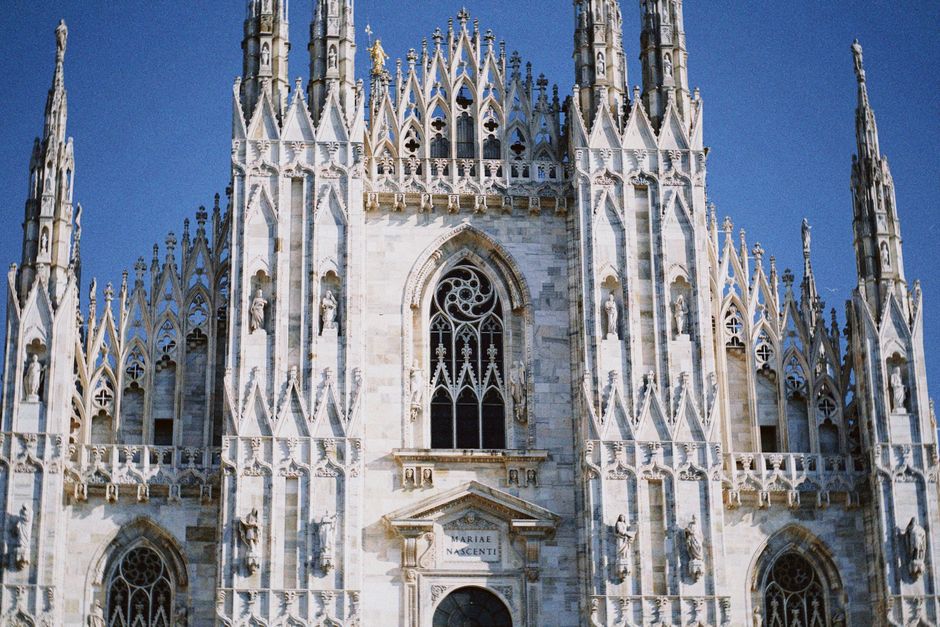
Milan's publicly funded cultural bodies are sitting on a tangle of duplicated digital image assets that is costing storage budgets and threatening the coherence of the city's visual identity at precisely the wrong moment. With the Milan-Cortina Winter Olympics opening ceremony scheduled for February 6, 2026 — now just months away — the institutions responsible for projecting Milan to a global audience must decide, quickly, how they handle the problem of redundant imagery across their archives and communications pipelines.
The issue sounds technical. It isn't. When multiple versions of the same photograph — shot at different resolutions, saved under different filenames, licensed under different terms — circulate inside the same organisation, the downstream consequences include published errors, rights violations, and brand inconsistency visible to anyone who picks up a press pack or visits an official website. For a city whose fashion and design economy depends on precise visual communication, that is not a trivial risk.
Where the Problem Is Sharpest
Two institutions illustrate the stakes most clearly. The Pinacoteca di Brera, on Via Brera in the city centre, maintains one of Italy's most reproduced permanent collections. Its digitisation programme, accelerated under a European cultural heritage funding round that closed in December 2024, added tens of thousands of high-resolution image files to its servers — many overlapping with earlier scans made under a separate Lombardy Region initiative dating to 2019. Staff there are now working through a reconciliation process to identify which files are the authoritative masters and which are legacy duplicates that can be retired. The decision on which software platform will govern that process has not yet been made public.
The Triennale Milano, on Viale Alemagna in Sempione, faces a related but distinct challenge. As a venue that rotates major design and architecture exhibitions year-round, it generates fresh image assets constantly — installation photographs, press images, archival documentation — while also holding decades of analogue material that was digitised in batches between 2015 and 2023. According to publicly available figures from the Italian Ministry of Culture's 2024 annual report on digital heritage, Italian museums collectively held more than 14 million digitised image files by the end of that year, with duplication rates in mid-sized institutions estimated at between 18 and 30 percent of total holdings. The Triennale has not disclosed its own duplication figure, but the ministry's range gives a working sense of the scale institutions in this category typically face.
What Happens Next
Three decisions will define how this plays out across Milan's cultural sector over the next six to nine months. The first is platform choice. Institutions that have so far relied on generic cloud storage — typically costing between €0.02 and €0.05 per gigabyte per month for standard tiers on European-hosted services — are under pressure from the Lombardy Region's digital infrastructure directorate to migrate toward interoperable systems that can speak to a shared metropolitan catalogue. A regional working group has been meeting since March 2026, though no binding framework has been announced.
The second decision is governance. Duplicate image replacement is not just a data-management task; it requires someone with both curatorial authority and technical sign-off to determine which version of a contested image is canonical. Institutions that lack a named digital asset manager — a role still absent from the organogram of several mid-sized Milanese museums — will either need to create one or assign the function to an existing curator, a move that typically adds roughly 15 to 20 percent to that individual's workload, based on benchmarks from comparable projects at institutions in Florence and Turin.
The third decision is timing. Delaying until after the Olympics would push the problem into a period when staff attention will be consumed by post-Games programming and budget reviews. Acting before February 6 means compressing a reconciliation process that normally runs six to twelve months into a much tighter window. The institutions that begin that process in the next eight weeks — with clear criteria for what counts as a duplicate and a designated owner for each master file — will be the ones whose image libraries hold up under the scrutiny that comes with hosting the world.