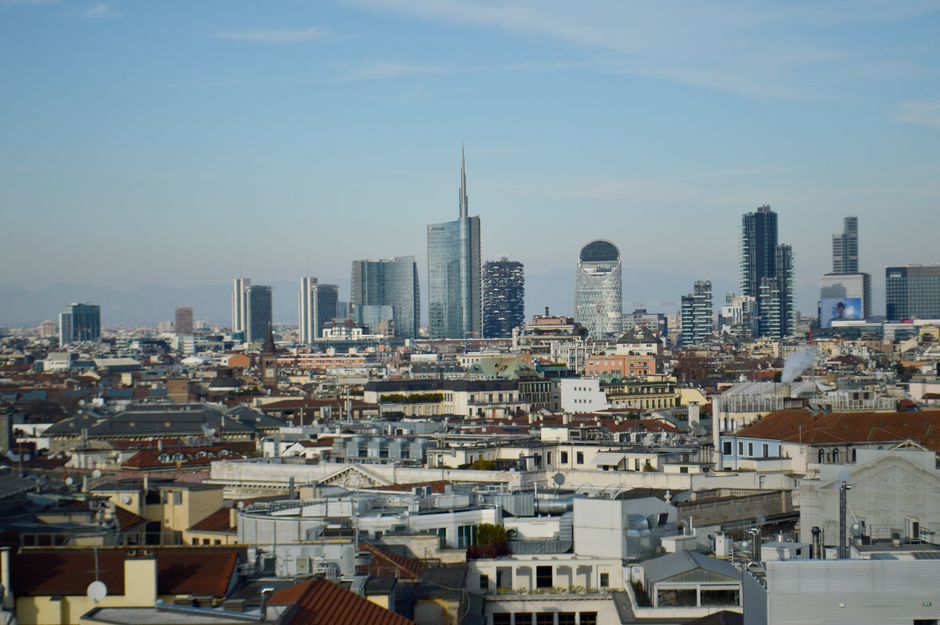
Milan's technology sector is entering a critical inflection point. As we head into the final months of 2026, the city's most ambitious innovators are pulling back the curtain on what's next—and the roadmaps are remarkably ambitious.
The most significant developments are clustering around the Zona Tortona district, where three major tech consolidators have confirmed expansion plans. Two companies have committed to establishing dedicated research facilities focused on generative AI applications in industrial manufacturing—a field where Milan-based firms already command 34% of the European market share, according to recent industry surveys. These facilities are expected to employ over 280 technologists by Q2 2027.
Quantum computing represents another frontier. Sources close to the Politecnico di Milano confirm active collaborations with international firms to establish a regional quantum research hub near the university's main campus on Piazza Leonardo da Vinci. While timelines remain fluid, preliminary discussions suggest pilot operations could begin within eighteen months, positioning Milan alongside Berlin and Amsterdam as a serious European contender in quantum development.
More immediately tangible are announcements around edge computing infrastructure. The Porta Nuova business district will host two new data processing centers, with completion targets set for early 2027. These facilities will support the emerging ecosystem of IoT applications that Milan's fashion and design industries increasingly depend on—a sector valued at approximately €2.8 billion locally.
Sustainability technology is generating particular momentum. Several firms operating from the growing innovation cluster in Lambrate have outlined plans for closed-loop manufacturing AI systems, designed to reduce industrial waste by up to 40%. Public funding support from the Lombardy regional development authority suggests these initiatives have regional backing.
The talent implications are significant. Milan's technology workforce has grown 28% since 2023, but demand is outpacing supply. Companies are now investing heavily in training partnerships with Bocconi University, Università Cattolica, and technical institutes across the Lombardy region. Average software engineer salaries in Milan have climbed to €58,000-€72,000 annually—a 15% increase year-over-year.
What distinguishes Milan's current moment is the convergence of traditional industrial strength with cutting-edge technological ambition. Unlike pure tech hubs built from scratch, Milan's innovation ecosystem is embedded within Europe's established manufacturing and design traditions. The next generation of products emerging from this environment won't simply be technological novelties—they'll be pragmatic solutions to real industrial challenges.
The roadmaps being unveiled now suggest Milan is positioning itself not as a follower in global tech trends, but as an originator of applied innovation. For a city historically known for fashion and design, that recalibration carries profound implications.
This article was compiled by AI from the sources linked above and screened before publishing. See our editorial standards.