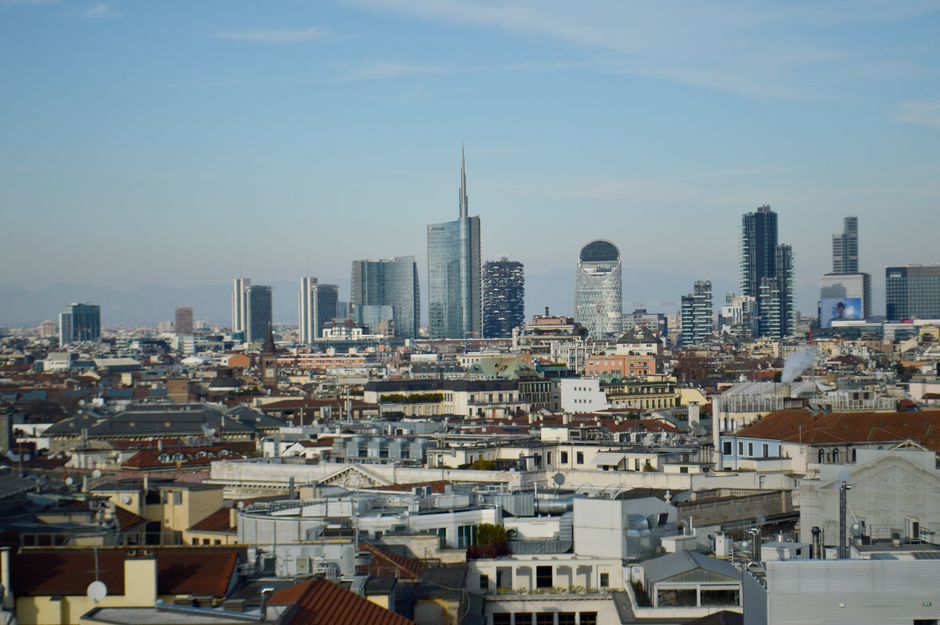
Walk through the Navigli district on a Tuesday evening and you'll spot a peculiar phenomenon: venture capitalists in tailored blazers clustering around espresso bars alongside engineers hunched over laptops. This is Milan's fintech ecosystem in microcosm—a distinctive convergence where old-world Italian craftsmanship meets cutting-edge financial technology.
The city hosts over 240 fintech companies today, a threefold increase since 2020, yet what distinguishes Milan from rival hubs isn't scale. It's sensibility. Where Berlin champions scrappy disruption and London trades on establishment connections, Milan's tech community has inherited something deeper: an understanding of how luxury, trust, and aesthetics intersect with money.
"Milan spent centuries perfecting the language of value," explains the city's growing fintech corridor concentrated around Porta Romana and the Isola neighbourhood. Companies here aren't just building payment processors—they're designing financial experiences that feel intentional, even beautiful. Startups like digital wealth managers and alternative banking platforms have begun attracting investment precisely because they graft Milan's design sensibility onto fintech infrastructure.
The numbers reflect this momentum. Last year, Milan-based fintech firms raised approximately €480 million in venture funding, representing 18% growth year-on-year. More tellingly, 34% of these companies focus on wealth management and investment products—segments that prize user experience design over pure engineering optimization.
The city's regulatory environment deserves credit too. Italy's Financial Conduct Authority has cultivated a surprisingly progressive sandbox programme, allowing startups to test regulated products with minimal bureaucratic friction. Combined with proximity to Switzerland's banking infrastructure and deep-rooted relationships with Northern Europe's institutional investors, Milan offers fintech founders an unusual advantage: European legitimacy without Silicon Valley's ruthlessness.
Real estate costs remain reasonable compared to London or Zurich—premium office space in Brera or Porta Romana runs €350-450 per square metre annually, substantially lower than equivalent London neighbourhoods. This affordability has enabled longer runways for product development before the funding pressure turns crushing.
Yet Milan's most distinctive asset remains intangible. The city's centuries-long relationship with commerce, design, and international trade has created a talent pool that understands both complexity and elegance. Engineers here don't view compliance as bureaucratic friction—they see it as a design challenge. Designers don't treat finance as boring—they treat it as an opportunity to make systems trustworthy through clarity.
As geopolitical fragmentation pushes European tech toward greater autonomy from American platforms, Milan's fintech ecosystem is quietly positioning itself as something European capital markets have lacked: a place where innovation feels sophisticated rather than chaotic, ambitious yet grounded in institutional understanding. That's not a replicable advantage—it's baked into the city's DNA.
This article was compiled by AI from the sources linked above and screened before publishing. See our editorial standards.