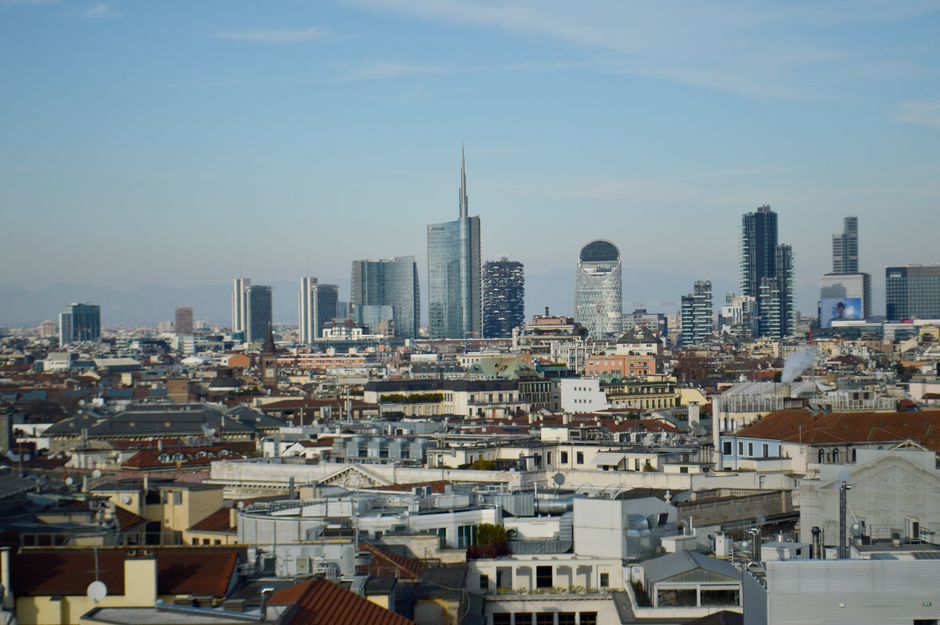
Walk through the Navigli district on any given Thursday evening, and you'll find something Silicon Valley rarely offers: venture capitalists discussing machine learning over aperitivos at a 300-year-old canal-side bar. This collision of old-world craftsmanship and cutting-edge technology defines Milan's distinctive position in the global AI revolution.
Unlike San Francisco or Beijing, Milan's artificial intelligence boom isn't driven by consumer apps or autonomous vehicles. Instead, it's rooted in solving problems for an industry worth €400 billion annually: fashion and design. Companies like DeepVision AI, headquartered near Porta Romana, use neural networks to predict colour trends 18 months in advance—a capability that has attracted investment from LVMH and Kering subsidiaries. Smaller startups clustered around the Bovisa neighbourhood focus on supply-chain optimisation for luxury manufacturers, where a single production error costs exponentially more than in mass-market sectors.
The numbers tell a compelling story. Milan's AI sector grew 34% year-over-year through 2025, according to recent Politecnico di Milano research—faster than the European average. Yet venture funding here averages €2.8 million per deal, significantly lower than Silicon Valley's €8.4 million. What Milan lacks in capital, it compensates for with something rarer: domain expertise. The city has inherited 150 years of accumulated knowledge about materials, aesthetics, and manufacturing excellence.
This specialisation creates a distinct competitive advantage. When an AI startup in Milan trains its model, it does so against datasets of fabric weaves, furniture proportions, and colour psychology—problems that require cultural understanding most international engineers lack. The result: Milan-based AI companies rarely compete on generic technology. They compete on relevance.
The infrastructure supports this niche focus. The Hub&Spoke innovation district near Centrale station hosts over 40 AI-adjacent companies, many collaborating directly with design schools like NABA and Politecnico. Unlike the hypercompetitive secrecy of Silicon Valley, Milan's ecosystem thrives on a more open model of knowledge-sharing—a legacy of Italy's craft-based manufacturing tradition.
As global economic uncertainty continues, Milan's AI strategy increasingly looks prescient. While generic AI applications face commoditisation and regulatory scrutiny worldwide, Milan's luxury-focused approach targets markets with higher margins, greater brand loyalty, and customers who value innovation primarily as a means to preserve tradition. In 2026, that's proving to be a far more sustainable business model than chasing disruption for its own sake.
This article was compiled by AI from the sources linked above and screened before publishing. See our editorial standards.