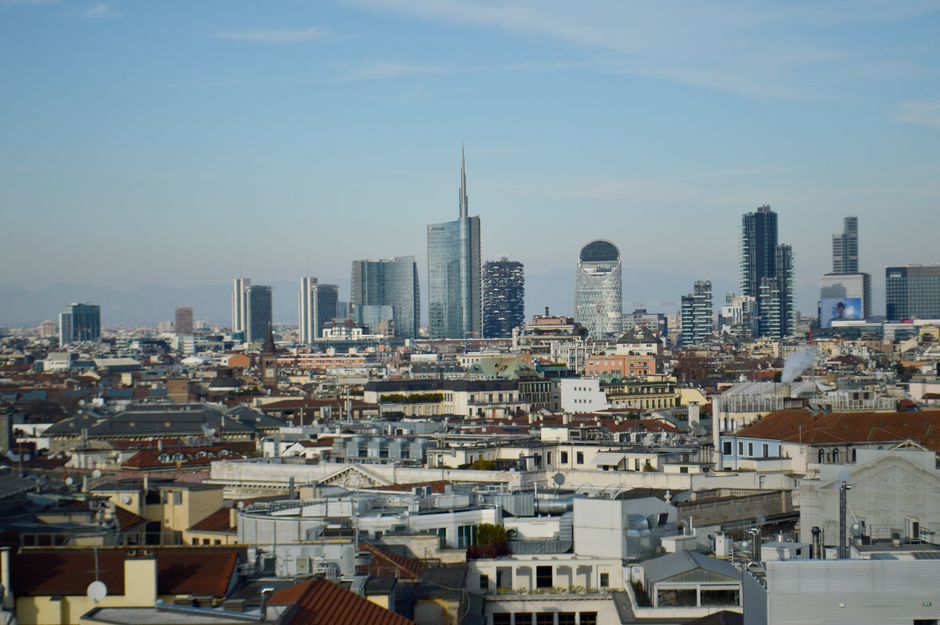
Walk through the Navigli district on any weekday evening and you'll spot them: young engineers and designers hunched over laptops in converted warehouses, their conversation threading between machine learning architectures and fabric tensile strength. This scene—repeating across spaces like BASE Milano and the emerging tech hubs near Porta Genova—encapsulates what makes Milan's approach to artificial intelligence fundamentally different from the move-fast-break-things mentality dominating American tech capitals.
Unlike San Francisco or London, Milan's AI revolution isn't abstractions divorced from physical reality. It's embedded in the city's DNA as a global design and manufacturing powerhouse. Companies clustering around the Lambrate neighbourhood—historically an industrial zone now transformed into a creative district—are using AI not to eliminate production but to amplify it. The city's fashion and furniture sectors, worth an estimated €40 billion annually, have become unexpected laboratories for applied machine learning. Algorithms optimizing fabric dyeing processes, predicting trend cycles with startling accuracy, automating quality control in luxury goods manufacturing—these applications address concrete business problems that generate measurable returns.
The numbers tell a story: Milan now hosts over 320 AI-focused startups, a 45 percent increase since 2023. But crucially, many aren't venture-capital-fuelled moonshot factories. Instead, they're pragmatic partnerships between tech founders and established design houses—Armani, Prada, and smaller atelier brands—seeking competitive advantages in a market where craftsmanship remains non-negotiable. Office rents in San Francisco and London have become prohibitive; Milan's tech clusters offer comparable talent acquisition at roughly 40 percent lower cost, with access to centuries of artisanal expertise unavailable elsewhere.
Institutions like the Politecnico di Milano have cultivated this distinctive ecosystem. Their human-centered design approach—treating technology as a tool for enhancing creativity rather than replacing it—shapes how local entrepreneurs conceptualize AI applications. This philosophy permeates the city's approach to AI ethics, too. Milan has become a quiet leader in responsible AI policy development, with organizations like the Fondazione Telethon and academic researchers collaborating on frameworks that balance innovation with social impact.
The real distinctiveness lies in what Milan refuses to become: a city where AI is abstracted from consequences. Here, artificial intelligence serves an industry built on beauty, precision, and human judgment. That's not a limitation. It's a competitive advantage the rest of the world is only beginning to notice.
This article was compiled by AI from the sources linked above and screened before publishing. See our editorial standards.