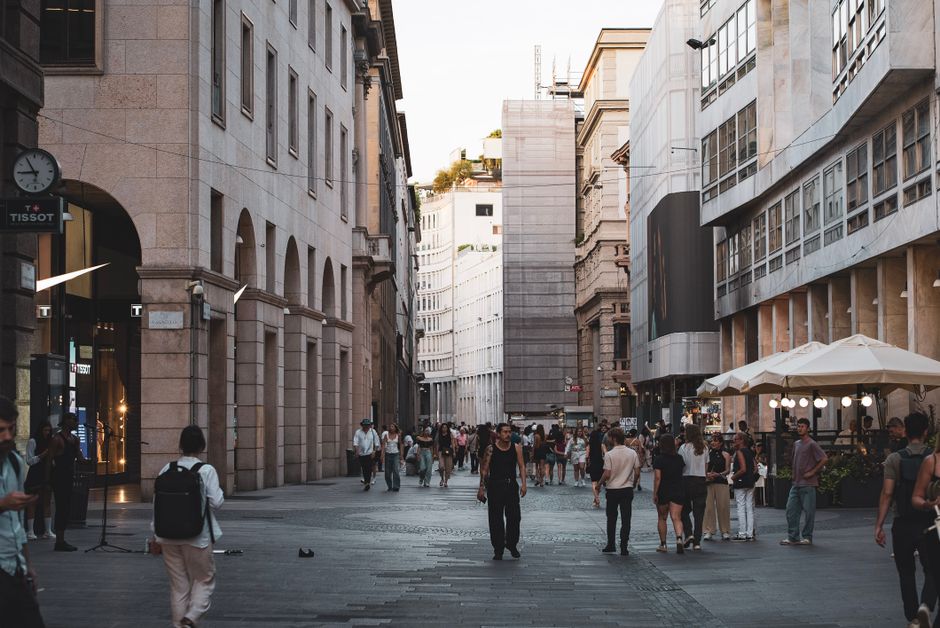
Walk through the Navigli district on any Tuesday evening and you'll notice something distinctly contemporary: yoga mats emerging from messenger bags, meditation app notifications chiming during aperitivo, wellness conversations that would have seemed niche a decade ago now dominating Milan's social wellness landscape.
The shift is real. Since 2020, Milan has seen a 40% rise in dedicated yoga and meditation studios, with concentrated clusters forming around Porta Romana, Brera, and increasingly in the business districts near Garibaldi. Yet while global wellness culture often emphasises tracking, quantification, and optimisation—the hallmarks of international trends popularised by Silicon Valley—Milan's adoption tells a different, more culturally rooted story.
"Italians aren't driven by the metrics obsession," explains wellness culture in Milan, where the Mediterranean approach prioritises integration into daily life rather than isolated wellness sessions. Studio memberships typically range from €80–150 monthly, comparable to European capitals, but the philosophy differs markedly. Rather than positioning yoga as performance optimisation or biohacking, local studios emphasise breathing (pranayama) and social connection—values that align more naturally with Milan's cherished aperitivo culture than with quantified self-tracking.
Organisations like those operating across Sempione Park's wellness ecosystem have observed that Milanese practitioners gravitate toward classes that balance intensity with ritual. A typical week might include breathwork sessions at sunset, group meditation in neighbourhood gardens, and restorative practices—less about achieving Instagram-worthy poses, more about creating sustainable daily habits.
The data supports this observation. Global meditation app usage emphasises streak-tracking and achievement badges; in Milan, studio owners report that retention depends on community and consistency, not gamification. Local public healthcare, through Lombardy's regional wellness initiatives, has also begun integrating yoga and mindfulness into preventive health programmes—a systemic approach less common in markets where wellness remains privatised.
This doesn't mean Milan is immune to international trends. Heated vinyasa, sound baths, and breathwork-focused studios have all arrived, often marketed with aspirational language borrowed from global wellness lexicons. Yet they coexist with a quieter, more integrated practice: the regular practitioner attending class not for transformation, but for belonging.
As Milan continues evolving as a wellness destination, the question isn't whether global trends will take root—they already have. Rather, it's whether the city will maintain its distinctive approach: wellness as lifestyle integration rather than lifestyle design, holistic wellbeing as community ritual rather than individual optimisation.
This article was compiled by AI from the sources linked above and screened before publishing. See our editorial standards.