Stay Strong, Stay Free: Milan's Guide to Low-Cost Wellness for Older Adults
From Sempione Park's outdoor gyms to municipally funded physiotherapy, here is where Milan's over-65s can move, stretch and socialise without spending a fortune.
From Sempione Park's outdoor gyms to municipally funded physiotherapy, here is where Milan's over-65s can move, stretch and socialise without spending a fortune.

Milan's public health network offers older residents a wider menu of free and subsidised wellness services than most Italians realise — and this July, with temperatures already nudging 34°C in the city centre, knowing where to go matters more than ever. The Comune di Milano runs at least fourteen dedicated centri socio-ricreativi for adults over 60, scattered from Niguarda in the north to Corvetto in the south, and entry to most costs nothing at all.
The timing is pointed. Italy's National Institute of Statistics, ISTAT, reported last year that roughly 23 percent of the Italian population is now over 65 — one of the highest proportions in Europe. In Lombardy alone, age-related mobility decline costs the regional health service, ATS Milano, an estimated €1.4 billion annually in emergency and long-term care. Preventive movement programmes, health economists increasingly argue, cut those costs significantly. The city has taken notice.
Sempione Park, just west of the Arco della Pace, has three free outdoor fitness stations specifically equipped with low-impact resistance machines rated safe for older adults. The Comune installed the third station in March 2026 along the northern path near Viale Alemagna. No membership, no booking — show up. Mobility instructors from the non-profit Auser Milano, which operates out of offices on Via Copernico, run guided outdoor sessions there every Tuesday and Thursday morning at 9 a.m. through September. Auser's programmes are free to members; annual membership costs €15.
For those who prefer water, the Centro Sportivo Saini in Via Corelli — a municipally owned facility in the Forlanini district — charges €3.50 per session for over-65 cardholders holding the Carta Barcellona, Milan's concessionary pass for low-income residents. Standard lane swimming without the card runs €5.50. The Carta Barcellona itself is free to apply for and covers dozens of cultural and sports facilities across the city; applications go through the Sportello Sociale at any of Milan's nine civic centres, called Punti Comunità.
Physiotherapy is the piece many older Milanese overlook. Under the Servizio Sanitario Nazionale, residents with a GP referral — from any medico di base enrolled with ATS Milano — can access up to twelve physiotherapy sessions per year at a standard co-payment of €36.15 for the full cycle, not per session. For those holding exemption codes based on age and income, the co-payment drops to zero. The key is getting the referral; GPs at the Casa di Comunità on Via Livigno in the Isola neighbourhood have run a dedicated over-65 mobility clinic on Wednesday afternoons since January 2026.
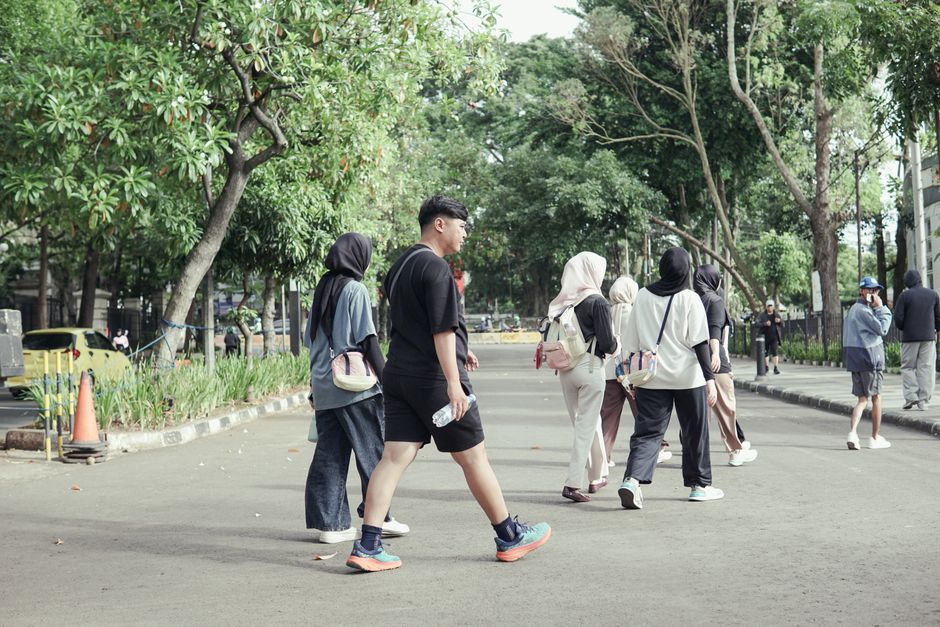
The Navigli canal network has become an unlikely venue for structured wellness. Every Saturday morning at 7:30 a.m., the volunteer group Nordic Walking Milano leads a free two-hour walk along the Naviglio Grande towpath from the Vicolo dei Lavandai all the way to the Conchetta bridge. Poles are available to borrow. The group, affiliated with the Italian Nordic Walking Federation, asks only that newcomers register once via their website — no cost attached.
Milan's aperitivo culture, often written off as purely a drinking ritual, has a quieter wellness dimension for older residents. The Ostelli Comunali programme, run jointly by the Comune and Caritas Ambrosiana, hosts weekly early-evening social hours at community centres in Bovisa and Porta Genova specifically designed to address isolation among over-70s — a factor that clinical literature links directly to accelerated physical decline. Attendance is free; the spritz is optional and costs €2.50.
The practical first step is the same regardless of which service appeals: visit the nearest Punto Comunità, bring your codice fiscale and any existing health documentation, and ask specifically about the Piano Anziani Attivi, the city's active-ageing coordination programme. Staff can map available services to your postcode and, critically, flag which ones require a GP referral so nothing is delayed. For personal health decisions, consulting your medico di base remains the essential starting point before joining any new physical programme.
How does this story make you feel?
Spread the word
About this article
Published by The Daily Milan
Daily brief
Free, in your inbox before 7am. Weekdays.
More in Wellness