The Hidden Nature Walks Locals Love But Tourists Miss
While visitors crowd the Duomo selfie-spots, Milan's most devoted walkers slip into green corridors that the city's tourism brochures barely mention.
While visitors crowd the Duomo selfie-spots, Milan's most devoted walkers slip into green corridors that the city's tourism brochures barely mention.

Milan has more urban green space than most Italians will admit. The city maintains roughly 18 million square metres of parks and public gardens — about 18 square metres per resident — yet the vast majority of weekend foot traffic still funnels into Sempione Park and stops there. The real walkers, the ones out before 7am on a Saturday, know better.
Summer 2026 has pushed that knowledge to the surface. Record heat across the Po Valley this June sent Milanese residents hunting for shade, and the city's lesser-known green corridors quietly filled up. Wellness culture here has always leaned toward the practical — a brisk walk along the Navigli before aperitivo, a bike sprint through Porta Venezia — but the heat is nudging people further off the obvious route and into pockets of the city that genuinely surprise.
Start with the Boscoincittà, a managed urban forest of roughly 110 hectares in the Trenno district on Milan's western fringe, maintained by Italia Nostra since 1974. Most people who don't live in Quarto Cagnino or Baggio have never set foot there. The forest has 14 kilometres of marked trails, a working farm, and a Wednesday morning guided walk program that runs from April through October. Entry is free. The nearest tram stop is Viale Trenno on line 14. It takes about 40 minutes from the Duomo, which is precisely why tourists skip it.
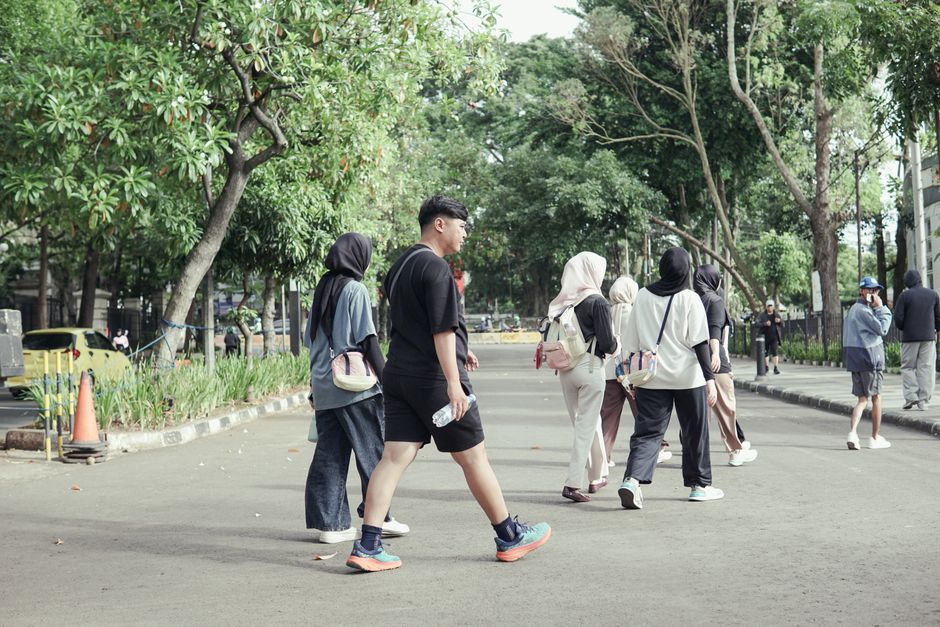
East of the city, the Martesana greenway runs 36 kilometres along the old Naviglio Martesana canal from the Cassina de' Pomm area — a former farmhouse complex near Greco-Pirelli — all the way out to Cassano d'Adda. Locals use the stretch between Via Melchiorre Gioia and the Gorla neighbourhood as a morning walk or a lunch-break run. The path is almost completely shaded by mature plane trees between May and October. On a weekday morning you'll share it mostly with pensioners, dog owners, and the occasional courier. There are no ticket booths, no queues, no selfie-stick vendors.
For something genuinely unknown, the Parco delle Cave in the Muggiano district holds seven artificial lakes formed in disused quarries. The Comune di Milano officially manages 135 hectares of the site, and the birdwatching is serious enough that the Lipu — Italy's ornithological protection league — runs observation posts there. Bring mosquito repellent and flat shoes. The gravel paths are uneven but rewarding.
Urban heat research published by the Politecnico di Milano in 2024 found that dense city neighbourhoods in central Milan can run 4 to 6 degrees Celsius hotter than the peripheral green corridors on peak summer days. That temperature gap translates directly into physiology — cooler air lowers resting heart rate and reduces the risk of heat exhaustion during outdoor exercise. Given that June 2026 has been one of the hottest on record across northern Italy, that data is not academic.
The broader wellness case is just as compelling. A 2023 study by the European Environment Agency found that adults who walk in natural or semi-natural green space at least twice a week report significantly lower self-reported stress scores than those who exercise only in built environments. Milan's peripheral green corridors offer exactly that — distance from traffic noise, tree cover, irregular terrain — without requiring a train ticket out of the city.
The practical entry points are straightforward. Download the Comune di Milano's Sentieri Verdi map (available free through the city's institutional website, comune.milano.it) which plots 22 green corridors across all nine municipalities. The Boscoincittà guided walks require advance booking through Italia Nostra's Milan chapter — spots fill up quickly in summer, so register at least a week ahead. For the Martesana greenway, no planning is required beyond comfortable shoes and a water bottle. The best access point west of the Greco-Pirelli station is the Alzaia Naviglio Martesana footpath entrance on Via Idro, which drops you directly onto the shaded towpath. Go early. Bring sunscreen anyway. And tell no one — at least not the tourists.
How does this story make you feel?
Spread the word
About this article
Published by The Daily Milan
Daily brief
Free, in your inbox before 7am. Weekdays.
More in Wellness