A Beginner's Guide to Starting a Meditation Practice in Milan
You don't need a retreat in the mountains or an app subscription—here's how to build a real sitting practice in a city that never fully slows down.
You don't need a retreat in the mountains or an app subscription—here's how to build a real sitting practice in a city that never fully slows down.

More Milanese are sitting still on purpose. Enrollment in structured mindfulness courses at Milan's public health network, the ASST Fatebenefratelli Sacco, rose by roughly 22 percent between 2023 and 2025, according to figures cited by the Lombardy regional health authority last autumn. The numbers reflect something broader: a city historically wired for productivity and spritz-fuelled sociability is quietly turning inward.
The timing makes sense. Urban heat, economic pressure, and the relentless pace of the fashion and finance districts around Porta Nuova have pushed stress indicators upward across northern Italy. The World Health Organization estimates that anxiety disorders now affect around 4 percent of the global population, a figure that climbs in dense metropolitan areas. Meditation—specifically the secular, evidence-backed variety rooted in Mindfulness-Based Stress Reduction, developed by Jon Kabat-Zinn at the University of Massachusetts in 1979—has accumulated enough clinical credibility that Italian general practitioners are increasingly pointing patients toward it as a complement to standard care.
Starting, though, is the hard part. Most beginners quit within two weeks, usually because they sit down expecting silence and get chaos instead.
The single most important thing is this: five minutes beats fifty. Neuroscience research published in NeuroImage in 2021 found measurable changes in grey matter density in the anterior cingulate cortex after just eight weeks of daily practice averaging 13 minutes per session. You do not need an hour. You need consistency.
For structure, two organisations in Milan stand out for newcomers. The Centro Mindfulness Milano, based near Corso Buenos Aires, runs the full eight-week MBSR programme several times a year; the next cohort begins in September 2026, with places at around €350 for the complete course. That includes guided sessions, a half-day retreat, and printed materials. For those who want something more drop-in and less committed, Associazione Essere, which operates out of a quiet courtyard studio on Via Savona in the Tortona neighbourhood, holds weekly beginner sits every Tuesday evening at 19:30 for €12 per session.
Location matters for home practice too. Sempione Park, a ten-minute walk from Cadorna station, opens at 6:30 a.m. The benches near the Arco della Pace, particularly on weekday mornings before 8:00, offer the kind of ambient urban calm—birds, distant traffic, the smell of lime trees in summer—that actually helps beginners anchor attention without the pressure of complete silence. Several regulars have made a habit of arriving there before their commute, sitting for ten to fifteen minutes, then cycling the Navigli towpath south toward Porta Genova. The movement afterward isn't incidental; research from the Max Planck Institute for Human Cognitive and Brain Sciences suggests that gentle aerobic activity following meditation consolidates the attentional benefits of the sit.
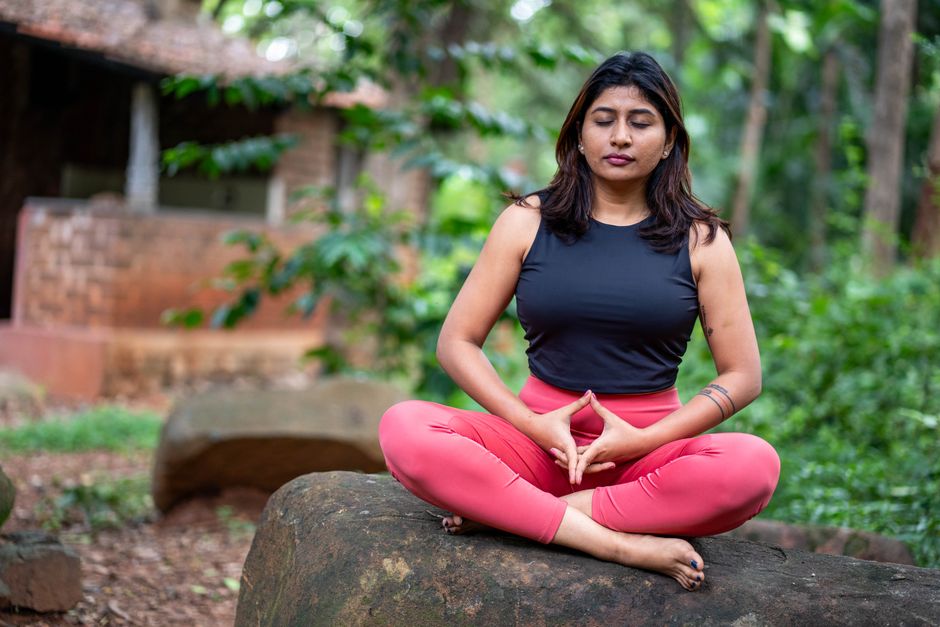
For an absolute beginner, the mechanics are straightforward. Sit upright on a chair or cushion with your feet flat on the floor—you do not need to cross your legs. Set a timer for five minutes. Close your eyes or lower your gaze. Breathe normally and place your attention on the physical sensation of the breath entering and leaving the nostrils. When your mind wanders—and it will, immediately and often—simply notice that it has wandered and return your attention to the breath. That return is the practice. It is not a failure; it is the repetition that builds capacity.
After two weeks at five minutes, move to ten. After a month, try the 13-minute benchmark from the research. Do not jump to 30 minutes in week one because a podcast told you to.
Smartphone apps can help with the mechanics of timing and guided audio, but they carry a real risk: screen dependency that contradicts the point. A simple kitchen timer or the free Insight Timer app—which offers a plain bell function without a social feed—works fine.
Milanese practitioners who consult their medico di base about stress or sleep often find that their doctor is now familiar with MBSR protocols and can refer them to NHS-adjacent services through the Servizio Sanitario Nazionale, which in Lombardy has been piloting mindfulness integration at select consultori since 2024. That's a reasonable first conversation to have before spending anything at all. The practice itself, once learned, costs nothing.
How does this story make you feel?
Spread the word
About this article
Published by The Daily Milan
Daily brief
Free, in your inbox before 7am. Weekdays.
More in Wellness