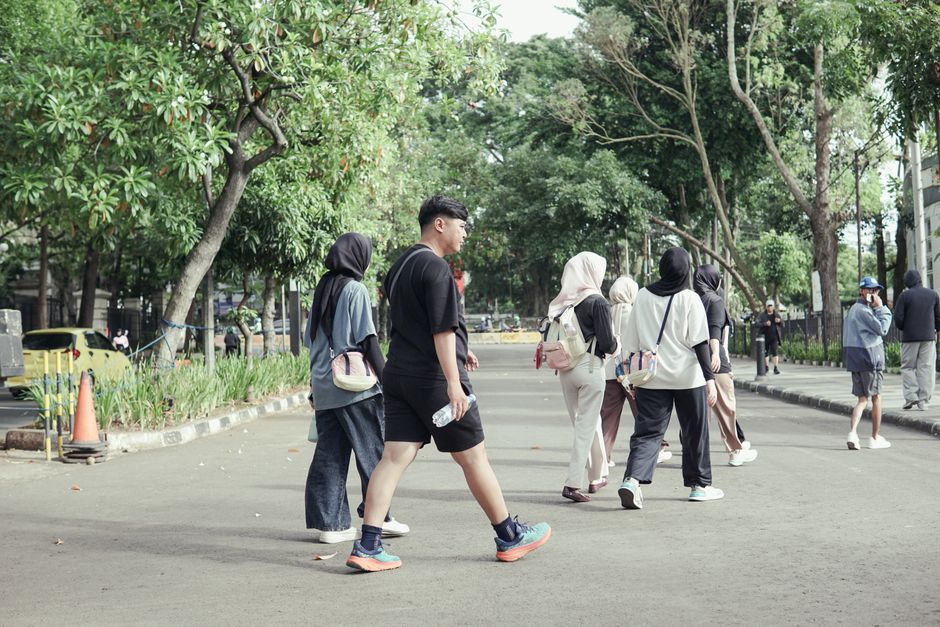
Group walking is having a serious moment in Milan. Across the city's quartieri, small clusters of residents are self-organising weekly walks that have nothing to do with competitive running clubs and everything to do with showing up, talking, and moving at a pace that lets you do both. The trend is measurable: the Comune di Milano registered a 34 percent increase in applications for informal public-space activity permits between January and May 2026 compared with the same period in 2024, with walking groups accounting for the largest single category.
The timing is not accidental. July in northern Italy brings the kind of oppressive heat that makes solo midday exercise punishing, but early mornings and evenings remain perfectly navigable. Public health researchers at the Università degli Studi di Milano have flagged sedentary behaviour as a growing concern in dense urban populations, and the city's Piano di Governo del Territorio 2030 explicitly ties green-corridor access—along the Alzaia Naviglio Grande, through the Bosco in Città in Baggio, through Parco Sempione—to preventive health strategy. Walking groups slot directly into that framework, and they cost nothing to join.
Picking Your Route and Your Rhythm
Start with a loop you already know. The 4.2-kilometre circuit around the outer edge of Parco Sempione, beginning at the Arco della Pace and running past the Triennale di Milano back to the Castello Sforzesco, is flat, well-lit, and busy enough at 7 a.m. to feel safe for first-timers. For residents in the Porta Romana or Navigli zones, the Alzaia Naviglio Pavese towpath south from the Conca Fallata offers six car-free kilometres with reliable shade from plane trees. Both routes have public water fountains—a non-trivial detail in early July.
Decide on frequency before you recruit anyone. Three mornings a week at the same time, same starting point, is enough to build habit without overwhelming busy schedules. A WhatsApp group or a pinned post on a local Facebook community page—Zona 1 residents frequently use the group Naviglio Lovers Milano, which has more than 12,000 members—is sufficient infrastructure to start. Keep the first walk to 45 minutes. People who feel the outing fit their morning will come back; those who feel ambushed by a two-hour slog will not.
Making It Stick: Structure Without Bureaucracy
The groups that survive past August tend to have two things in common: a designated meeting spot with obvious landmarks, and a social ritual at the end. A coffee at Bar Magenta on Via Carducci, or an aperitivo at one of the Darsena terraces if the walk runs into early evening, gives people something to look forward to beyond the exercise itself. That aperitivo culture Milan takes seriously is genuinely functional here—it extends the social window and keeps the group cohesive through Italy's August holiday disruptions.
Practical logistics matter. Register your group with the Municipio di competenza if you plan to walk regularly in a named public park; the process is free and takes about two weeks through the Comune's Sportello Unico online portal. Liability is minimal for informal walking, but registration means the city's park wardens know your group and can assist if someone needs help. The ASD Podisti Milanesi, a long-established amateur sports association based near the Fiera di Milano, offers free advice sessions on organising non-competitive walking events and can connect new groups with established route maps vetted for surface quality and safety.
Aim for eight to twelve regular walkers. Below six, one or two absences can collapse the social energy; above fifteen, the group fragments into sub-conversations and loses cohesion on narrow towpaths. Post a printed notice at your local farmacia and at the condominium noticeboard if you live in one—these still work in Milan in ways that purely digital outreach sometimes does not. Set your first walk for a Saturday morning in mid-July, give people two weeks' notice, and accept that the first outing will feel slightly awkward. The second one almost always does not.
For anyone with cardiovascular conditions or joint issues, a conversation with your medico di base before starting any new exercise routine remains the sensible first step. The walking itself is low-risk; arriving informed is simply good sense.