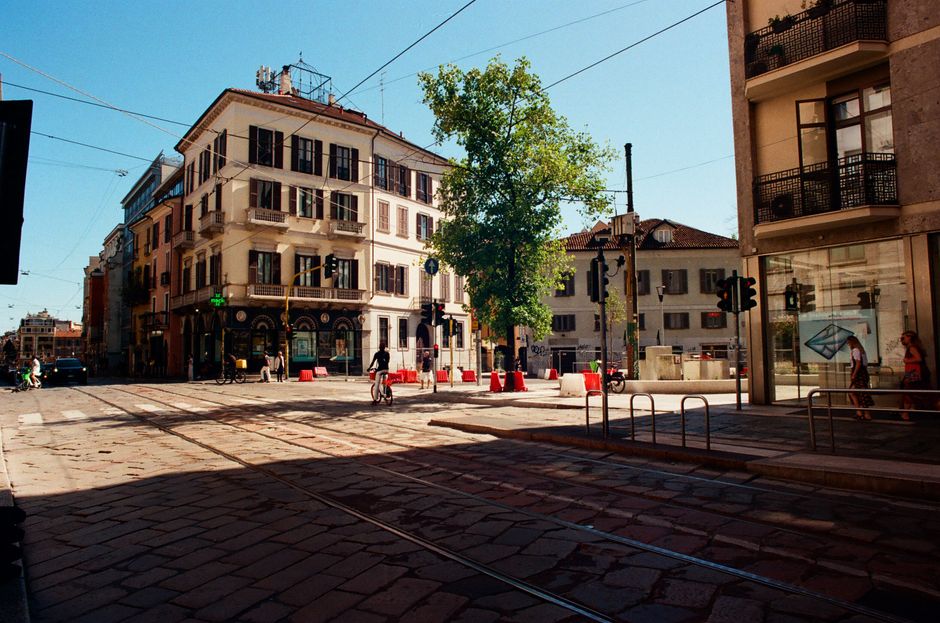
Walk through the Navigli district on a Saturday morning and you'll witness a quiet revolution. Parents who might have abandoned Milan a decade ago for the suburban sprawl are now choosing to stay, choosing to build lives here. The shift is visible in converted lofts along Via Casale, in the proliferation of family-run pizzerias doubling as community hubs, and in the patient queues outside the three Montessori schools now operating in the historic centre—a number that has tripled since 2015.
This transformation isn't accidental. It's driven by hundreds of ordinary Milanese families making extraordinary choices about where and how they want to raise their children. Consider the emergence of cooperative childcare networks in Zona 9, where parents share school-run duties and weekend supervision, reducing costs that can exceed €1,200 monthly for private nurseries. Or the grassroots movement that secured expanded green spaces at Parco Sempione, now equipped with accessible play areas designed with input from local parents rather than city planners alone.
The narrative around Milan's schools has shifted too. While the city's public school system still struggles with funding—Italian schools receive approximately 60% less per-pupil investment than OECD averages—community-driven initiatives are filling gaps. Parents in Brera have established homework support centres in parish halls. Immigrant families in the Porta Venezia neighbourhood have created multilingual reading groups that now operate in five languages across two locations.
Perhaps most tellingly, Milan's appeal to young families hinges on something less quantifiable than test scores or amenities: a sense of belonging. This city's reputation for efficiency and ambition can feel cold, yet behind closed doors—in the intimate networks of parents sharing school recommendations over espresso, in the WhatsApp groups coordinating weekend activities, in the informal mentorship between established residents and newcomers—there exists a warmth that contradicts Milan's polished exterior.
The faces that define contemporary family life here belong to architects juggling remote work and school pickups in Lambrate; to immigrant mothers establishing small businesses while navigating Italian bureaucracy; to educators experimenting with bilingual curricula; to grandparents who've become essential childcare anchors as both parents work. They're exhausted sometimes, occasionally overwhelmed, but increasingly convinced they're raising their children in a city that—despite its notorious pace and expense—is finally learning to value what families actually need.
Milan, it seems, is becoming a place where people want to stay, not escape from. The parents making that choice every morning are the real story.
This article was compiled by AI from the sources linked above and screened before publishing. See our editorial standards.